
Encephalartos dolomiticus
Encephalartos dolomiticus
Description
Growing requirements
Encephalartos dolomiticus is a rare species belonging to the Zamiaceae family, native to the dolomite mountain ranges in the Limpopo Province of South Africa. This ancient cycad is highly prized by botanical institutions and private collectors due to its striking appearance and historical rarity.
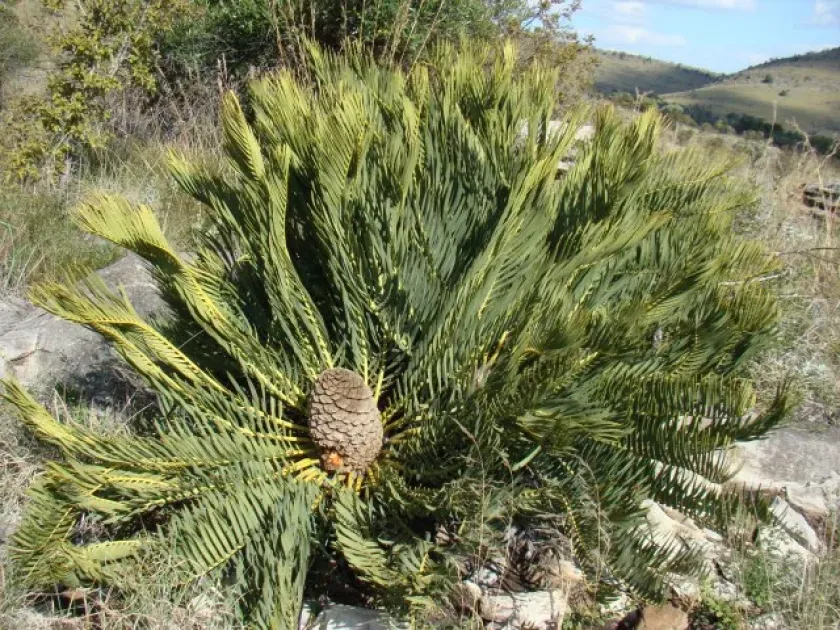
The plant features a stout, cylindrical trunk that grows very slowly over many decades. Its leaves are distinctively stiff, pinnate, and usually display a glaucous or bluish-green hue, arranged in a dense crown that creates an architectural presence in any botanical display.
Cultivation requirements for this species are specific, focusing on intense light and exceptional drainage. In greenhouse conditions, it thrives best when exposed to direct morning sunlight while being protected from intense midday scorching, which can affect the leaf color and health.
The substrate must be highly permeable, mimicking the rocky soil conditions of its native habitat. A mixture of horticultural grit, coarse sand, and a small amount of organic matter is ideal to ensure that excess moisture does not persist around the caudex, which is highly prone to rot.
Climate control is crucial, especially regarding air circulation. The plant requires a well-ventilated environment and prefers a seasonal variation in temperature, mimicking the natural cycles of the Limpopo region. During the winter, keeping the plant in a cooler, drier state promotes structural integrity.
Main diseases and pests
The primary pests affecting Encephalartos species include scale insects and mealybugs, which often hide in the crevices of the leaf bases. Effective control relies on manual removal and the application of systemic pesticides to ensure the plant remains free of these persistent pests.
Fungal infections, particularly root rot, are the most significant threat to the survival of the plant in cultivation. This is almost exclusively linked to overwatering or poor drainage systems. Strict adherence to watering intervals and monitoring soil moisture levels is essential for long-term health.