
Dyer's cycad
Encephalartos dyerianus
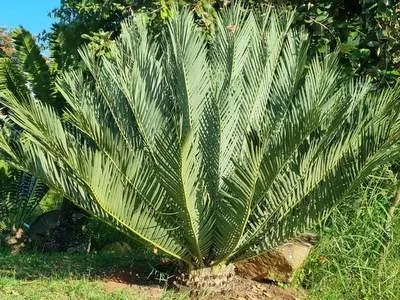
Description
Growing requirements
Dyer's cycad (Encephalartos dyerianus) belongs to the Zamiaceae family and is recognized as one of the most distinctive and endangered cycad species. Native to a very restricted area in Limpopo, South Africa, this plant is a living fossil valued by collectors and botanic gardens.
Botanically, it is characterized by a sturdy, slow-growing trunk and stiff, blue-green leaflets arranged in a palm-like crown. Its growth rate is exceptionally slow, often taking decades to reach maturity in both natural and cultivated settings.
The cultural requirements demand a well-draining, gritty soil mix. Because these plants are native to rocky slopes, the potting medium must ensure that water passes through quickly, preventing any saturation around the roots.
Climate management is crucial for success. In cultivation, Dyer's cycad requires full sun exposure to maintain its characteristic foliage color and vigor. It is sensitive to frost, necessitating indoor protection in non-tropical zones during the colder months.
Maintenance involves sparse irrigation, especially during the dormant season. Fertilization should be handled with care using balanced, slow-release formulas applied during the peak of the growth season to avoid burning the sensitive root structure.
Main diseases and pests
The most significant threat to Encephalartos dyerianus in cultivation is root rot, typically caused by overwatering or poor drainage. Once established, rot can be fatal for the plant due to its slow metabolism and limited ability to heal tissues.
Pest pressure is primarily driven by scale insects and mealybugs. These pests hide in the crevices of the trunk and the base of the leaves, where they cause significant damage by extracting sap and weakening the plant's defense systems.
Spider mites can also become a problem in dry, poorly ventilated environments. Regular misting or cleaning of the leaves, combined with appropriate miticides, helps to maintain the health of the foliage.
Fungal infections can manifest as leaf spots if the humidity is too high without adequate air movement. Improving air circulation around the plant is a critical preventive measure against these pathogens.
Strict biosecurity and hygiene protocols should be followed when handling or repotting this species. Using sterilized equipment is essential to avoid introducing pathogens, given the species' high sensitivity and slow recovery rate from injuries.