
Encephalartos hildebrandtii
Encephalartos hildebrandtii
Description
Growing requirements
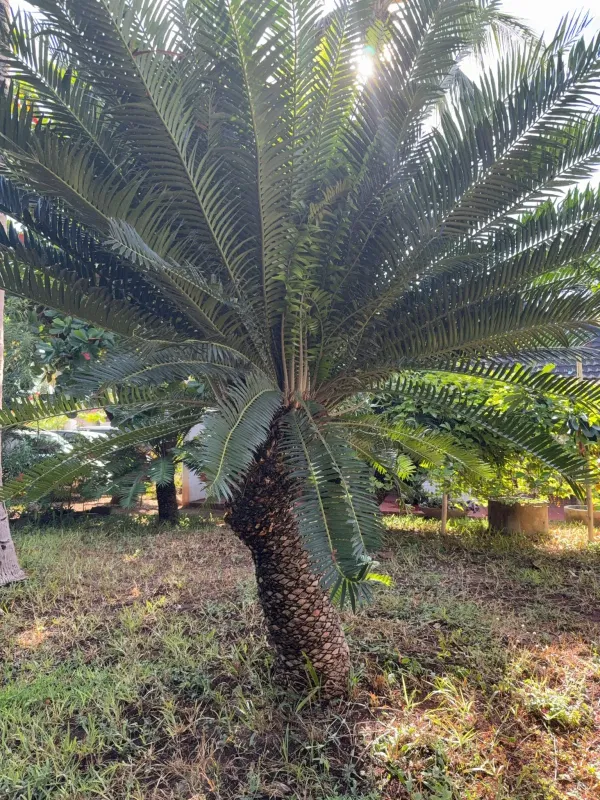
Encephalartos hildebrandtii is a large, tree-like cycad belonging to the Zamiaceae family. It is characterized by a robust, columnar trunk that can reach significant heights, topped with a crown of long, glossy, dark green pinnate leaves that add a structural architectural element to any space.
The species is native to East Africa, primarily distributed across coastal regions of Kenya and Tanzania. In its natural habitat, it thrives in a variety of environments, ranging from dense evergreen forests to open scrublands, showing a remarkable adaptability to different levels of light.
Cultivation requires a well-draining, nutrient-rich soil mix. A mixture of loam, sand, and organic compost is generally recommended to ensure proper root aeration. Drainage is the most critical factor; water must flow through the container or planting site freely to avoid fatal root rot.
This cycad demands a warm climate with consistent temperatures. It is not frost-tolerant and must be kept in controlled environments such as greenhouses or conservatories in regions with cold winters, ensuring that it receives plenty of bright, indirect sunlight throughout the year.
The primary use of Encephalartos hildebrandtii is ornamental. It is highly prized by cycad collectors and professional landscapers for its striking appearance and rarity. Due to its slow growth rate, mature specimens are considered valuable assets in botanical gardens and private tropical landscapes.
Main diseases and pests
The most common pests affecting this cycad include scale insects and mealybugs. These pests hide on the underside of leaves or near the base of the trunk, sucking nutrients and potentially transmitting diseases; regular inspection and horticultural oil treatments are effective control measures.
Fungal infections of the root system are the most frequent cause of plant mortality in domestic cultivation. These pathogens thrive in waterlogged, compacted soils, making strict adherence to watering cycles and high-quality aeration essential for the long-term survival of the plant.