
Encephalartos horridus
Encephalartos horridus
Description
Growing requirements
Encephalartos horridus, commonly known as the Eastern Cape blue cycad, is a unique plant belonging to the Zamiaceae family. Native to the Eastern Cape province of South Africa, this species thrives in dry, rocky scrublands and is characterized by its distinct, spiny, blue-grey foliage.
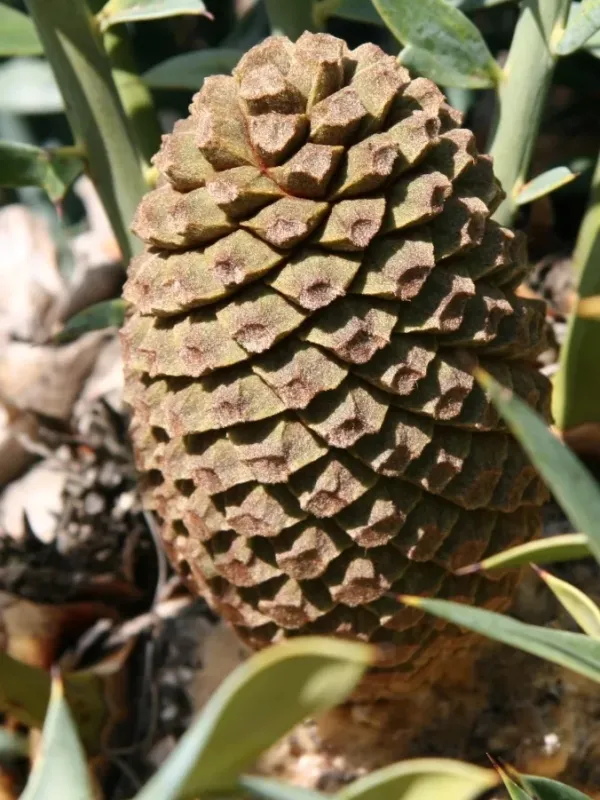
Botanically, this cycad features a robust trunk that can be subterranean or partially emergent. The leaves are rigid, pinnate, and segmented, with sharp, serrated margins that serve as a defensive mechanism. It is a slow-growing dioecious plant, meaning that male and female cones are produced on separate individuals.
Agricultural success with this species depends heavily on soil structure. The planting medium must be extremely well-draining, typically consisting of a mix of sand, grit, and minimal organic matter. Poor drainage is the leading cause of plant mortality due to root rot.
Regarding climate, Encephalartos horridus requires full sun to maintain its signature blue coloration. It is not frost-tolerant and must be kept in controlled environments or sheltered zones during winter months to protect the crown and growing point from freezing temperatures.
Watering requirements are conservative. During the active growth phase in spring and summer, the plant should be watered thoroughly only when the substrate has dried out completely. In winter, water should be withheld almost entirely to simulate the natural dormancy period of the species.
Main diseases and pests
The primary threats to Encephalartos horridus under cultivation are fungal infections, particularly root and stem rot caused by Phytophthora species. These pathogens thrive in stagnant, wet conditions and can destroy the root system rapidly.
Pest pressure is frequently dominated by scale insects and mealybugs. These pests hide in the crevices between the base of the leaves and the trunk, making them difficult to detect and eradicate without specific systemic insecticides.
Spider mites are another common challenge, especially in low-humidity environments. They cause stippling and discolouration of the leaflets, which significantly reduces the plant's aesthetic value and overall vigor.
Proper air circulation is crucial to prevent the onset of powdery mildew and other surface-dwelling fungi that can plague the cones and leaf structures. Using oscillating fans or ensuring natural cross-ventilation in greenhouses is an essential preventive measure.
To ensure long-term health, growers must avoid over-handling the plant and damaging the roots during transplanting. Any wounds to the caudex or root system should be treated with fungicides to prevent opportunistic infections from compromising the plant's survival.