
Encephalartos transvenosus
Encephalartos transvenosus
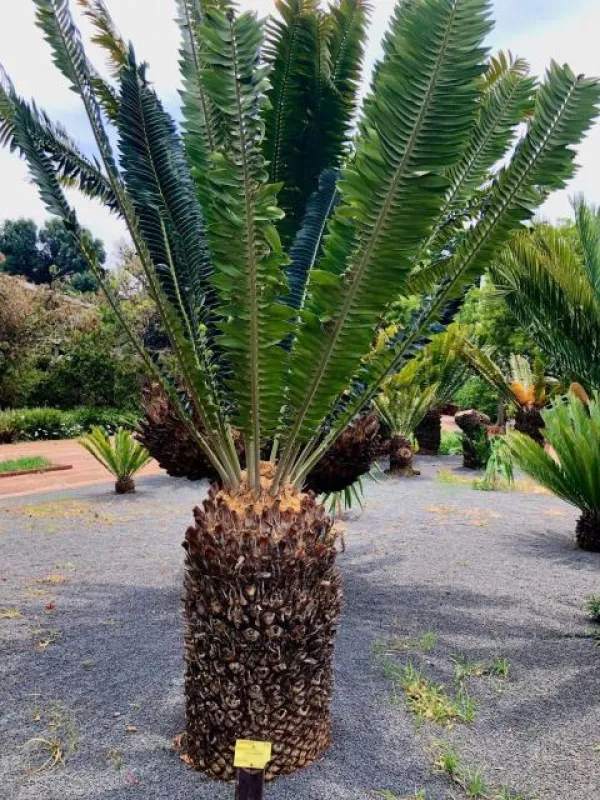
Description
Growing requirements
Encephalartos transvenosus, a member of the Zamiaceae family, is a massive cycad native to the Northern Province of South Africa. Known as the Modjadji cycad, it serves as an iconic ornamental specimen in botanical collections globally.
Cultivating this species requires a climate that mimics its natural habitat: warm, subtropical, and frost-free. In temperate regions, it is strictly an indoor or greenhouse plant, requiring specialized climate control systems to maintain year-round health.
The ideal growing medium must be highly porous and inorganic-leaning. A mix of sand, pumice, and aged pine bark ensures sufficient aeration, which is critical for preventing the root rot to which this species is highly susceptible.
Lighting requirements are significant; the plant thrives under bright, filtered light. While it can tolerate partial shade, insufficient light will cause the leaves to stretch and lose their characteristic rigid, deep-green structural integrity.
Irrigation practices are the most delicate aspect of its management. Water should be applied sparingly, allowing the root zone to dry out significantly between cycles to simulate the natural rainfall patterns of the South African escarpment.
Main diseases and pests
The primary horticultural threats to Encephalartos transvenosus include fungal infections such as root rot and stem rot, often triggered by excessive soil moisture and poor ventilation in greenhouse settings.
Pest management is focused on controlling mealybugs and scale insects. These pests tend to colonize the base of the crown and the undersides of the leaflets, causing significant aesthetic and physiological damage if left untreated.
Spider mites are another common challenge, especially in indoor environments where low humidity creates a breeding ground during the winter months, leading to leaf discoloration.
Effective control strategies involve the rotation of systemic insecticides and miticides, alongside careful monitoring of plant hygiene and the removal of dead or decaying lower foliage.
Because the plant grows slowly, recovery from infestations is lengthy; therefore, proactive measures and regular scouting are essential components of a successful agricultural maintenance program for this species.