
Middelburg cycad
Encephalartos middelburgensis
Description
Growing requirements
The Middelburg cycad (Encephalartos middelburgensis) is a distinctive member of the Zamiaceae family. Originating from the rugged terrains of the Middelburg region in South Africa, this cycad is adapted to harsh, rocky environments with excellent drainage and seasonal weather fluctuations.
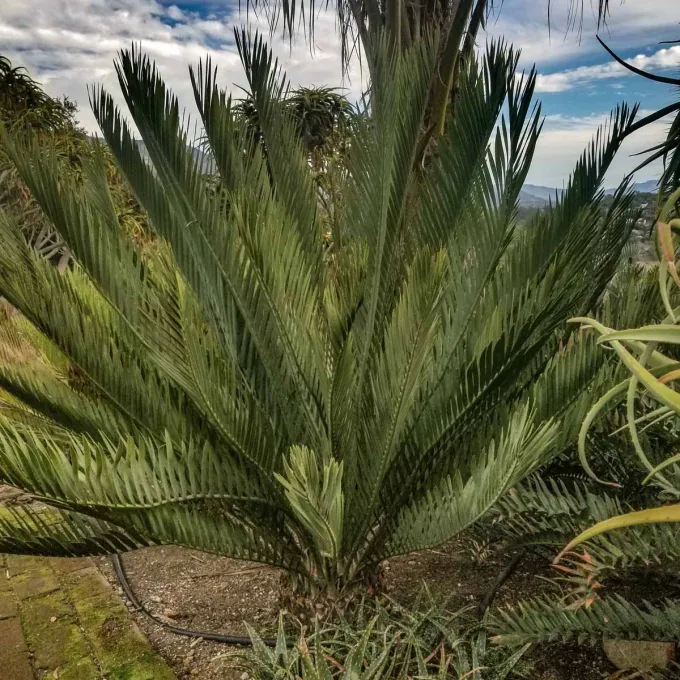
Botanically, it is characterized by a massive, pachycaul trunk that supports a crown of long, rigid, blue-green leaves. As a slow-growing gymnosperm, it maintains a prehistoric appearance, making it highly prized among botanical collectors and horticulturists worldwide.
Agricultural success in cultivation relies heavily on emulating its natural habitat. The soil medium must be highly porous, consisting largely of coarse sand, crushed granite, and small amounts of organic material. Poorly drained soil will inevitably lead to root failure within a short period.
Climate requirements include high light exposure and steady warmth. While it can withstand occasional cool temperatures, it is not frost-hardy and requires protection from extreme cold. Proper air circulation is essential in greenhouses to mimic the windy slopes of its native habitat and to manage humidity levels.
Economically, the species is cultivated primarily for conservation and display in botanical institutions. Because it is an endangered species protected under CITES, international trade and propagation are strictly managed to prevent the exploitation of wild populations and ensure genetic diversity.
Main diseases and pests
The primary pests affecting Encephalartos middelburgensis are mealybugs and armored scales, which colonize the base of the leaves and the crown. Integrated pest management practices, including the use of horticultural oils, are effective when applied systematically.
Root rot caused by Phytophthora and other fungal pathogens is the most lethal threat. This condition usually stems from poor substrate choice or overwatering. Preventive measures include using high-quality fungicides during the dormant season and ensuring total desiccation of the potting mix between water cycles.