
Encephalartos lehmannii
Encephalartos lehmannii
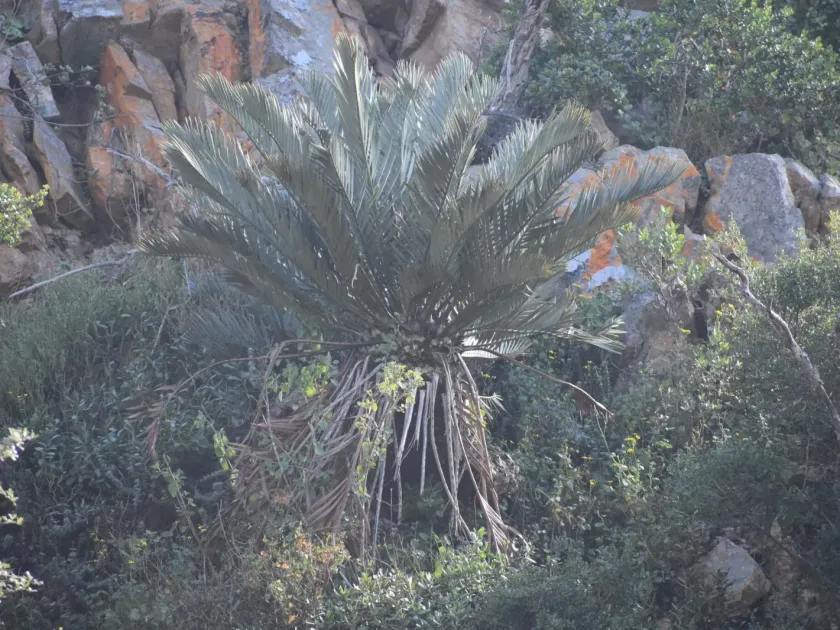
Description
Growing requirements
Encephalartos lehmannii is a distinguished member of the Zamiaceae family, native to the arid mountainous regions of the Eastern Cape in South Africa. Often referred to as the Karoo cycad, it is highly prized for its striking blue-green, rigid foliage.
To ensure healthy growth, the plant requires full sun exposure. In regions with high humidity or low light, the plant will struggle to maintain its characteristic compact shape and may become susceptible to fungal infections due to lack of transpiration.
The planting substrate must be exceptionally gritty and well-draining. A mix of pumice, coarse sand, and a small amount of organic compost is ideal to simulate the rocky terrain where it naturally thrives in the wild.
This species is well-adapted to extreme temperature fluctuations. However, in an agricultural or ornamental setting, maintaining a stable, warm growing season followed by a cool, dry dormant period is crucial for the plant's long-term health.
Irrigation should be applied with extreme caution. During the active growing season, water deeply but infrequently, allowing the substrate to dry out completely between waterings to prevent the development of root pathogens.
Main diseases and pests
Fungal rot is the most significant threat to the survival of Encephalartos lehmannii, typically induced by overwatering or poor ventilation within the root zone. Once the caudex begins to soften, the damage is often irreversible.
Pest management should focus on monitoring for common cycad pests, including scale insects and mealybugs, which tend to hide in the scales of the trunk and the base of the leaves, making them difficult to detect early.
Spider mites can also become a nuisance in indoor environments with low humidity. They weaken the plant by piercing the epidermis, which can lead to unsightly chlorotic spotting on the leaves.
- Regular inspection of the crown and leaf bases.
- Application of horticultural oils for scale control.
- Ensuring consistent airflow to discourage mite colonization.
Biosecurity is essential when introducing new specimens; always quarantine newly acquired plants to avoid spreading pests or soil-borne diseases to established collections.