
Encephalartos laurentianus
Encephalartos laurentianus
Description
Growing requirements
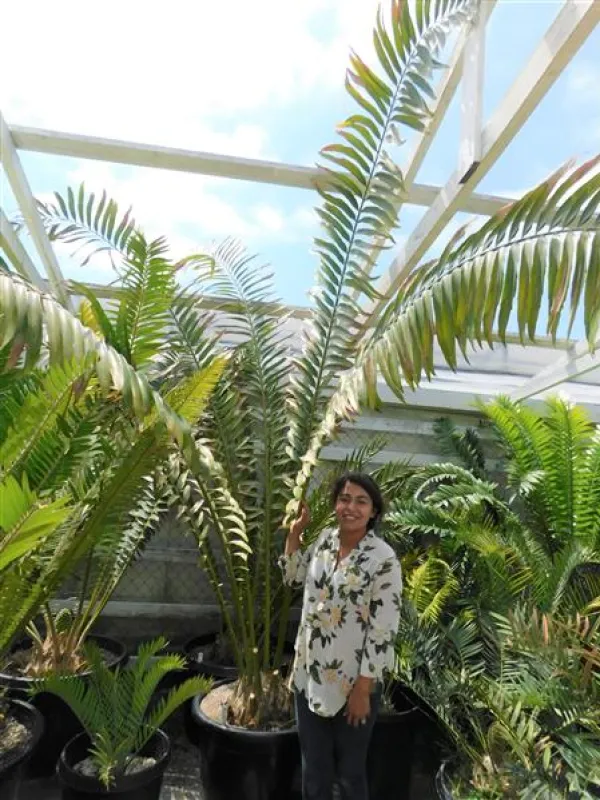
Encephalartos laurentianus is a prominent member of the Zamiaceae family, known for being one of the largest cycad species in the world. Its massive, robust trunk and wide, deep green leaflets create a striking appearance, reminiscent of ancient, prehistoric flora that once dominated the Earth.
The native distribution of this species is primarily concentrated in the Kwango River valley of Angola and the Democratic Republic of the Congo. In its natural habitat, it thrives in damp, shaded, or semi-shaded rocky environments near riverbanks, benefiting from high atmospheric humidity.
In cultivation, providing an exceptionally well-draining soil mix is mandatory to mirror its natural rocky slopes. A mixture of pumice, coarse sand, and high-quality organic matter provides the necessary aeration to prevent the root system from suffocating in stagnant water.
Temperature management is a key aspect of care as this species is strictly tropical. It requires constant warmth, ideally between 22°C and 28°C, and fails to survive in temperatures nearing freezing, making it suitable only for greenhouses or indoor settings in temperate climates.
While Encephalartos laurentianus is not used for food or fiber, it holds immense value in the botanical and horticultural sectors. As a slow-growing specimen, it is highly sought after by collectors, and its architectural beauty makes it a centerpiece in premium landscape designs.
Main diseases and pests
The most severe threat to the health of Encephalartos laurentianus is root rot, which is almost always caused by improper irrigation. Overwatering or lack of proper soil porosity leads to a quick decline in the plant's overall vigor.
Pest management is focused on common greenhouse invaders such as scale insects and mealybugs. These pests are particularly difficult to treat because they hide in the tough, armored bases of the leaf stalks, requiring systemic treatment rather than surface cleaning alone.
Fungal infections can occur when ambient humidity is high but air movement is stagnant. Providing adequate ventilation is a standard preventative measure to keep the foliage clean and free from necrotic spots caused by pathogens.
Spider mites can become a nuisance during the drier, hotter months if humidity levels drop too low. Frequent inspection of the underside of leaves is recommended, as this is where the mites typically establish their colonies before spreading.
If the plant is grown outdoors in favorable climates, it may be susceptible to local foliage-eating insects. However, in controlled environments, the primary risk remains the accidental introduction of pests through contaminated soil or new, unquarantined plant stock.