
Elaphoglossum latifolium
Elaphoglossum latifolium
Description
Growing requirements
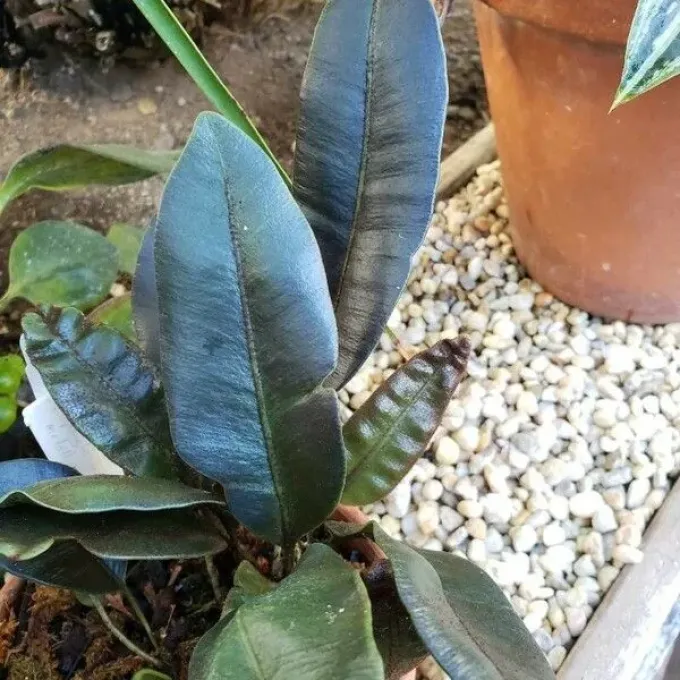
Elaphoglossum latifolium is an epiphytic fern belonging to the Lomariopsidaceae family. Originating from the tropical forests of Central and South America, it is prized in horticulture for its distinct leathery, lanceolate leaves and elegant, dark green foliage.
The plant grows from a creeping rhizome, which is well-adapted for attaching to tree bark in its natural rainforest habitat. In a controlled environment, it requires a specialized substrate that mimics forest litter to thrive successfully.
Optimal growing conditions require a consistent temperature between 20°C and 25°C. High humidity levels, ideally above 70%, are essential for maintaining the health of the fronds and preventing the edges from drying out or curling.
The soil should be a loose, well-draining mix consisting of orchid bark, peat moss, and perlite. This composition ensures that the roots receive adequate aeration while retaining sufficient moisture to support the fern's metabolism.
Bright, indirect light is necessary for healthy growth. Direct sunlight should be strictly avoided, as it can easily scorch the foliage and cause permanent damage to the structural integrity of the leaves.
Main diseases and pests
Common pests affecting this species include spider mites and scale insects, which often proliferate in environments with low air circulation or inadequate moisture. Regular cleaning of the leaves can prevent these infestations.
Root rot is the most frequent pathological issue, usually caused by overwatering or poor drainage within the pot. If the substrate remains waterlogged for extended periods, the rhizome will rapidly deteriorate.
Leaf spot diseases, often caused by stagnant humidity and fungal spores, can compromise the aesthetic quality of the foliage. Good ventilation is the best preventative measure against these infections.
Mealybugs may occasionally settle in the crevices of the rhizome or leaf bases. If identified, manual removal or the application of horticultural soaps is recommended to keep the population under control.
Improper mineral balance, particularly high salt content in the irrigation water, can cause tip burn on the fronds. Using rainwater or distilled water is highly beneficial for the long-term health of the plant.