
Elaphoglossum hybridum
Elaphoglossum hybridum
Description
Growing requirements
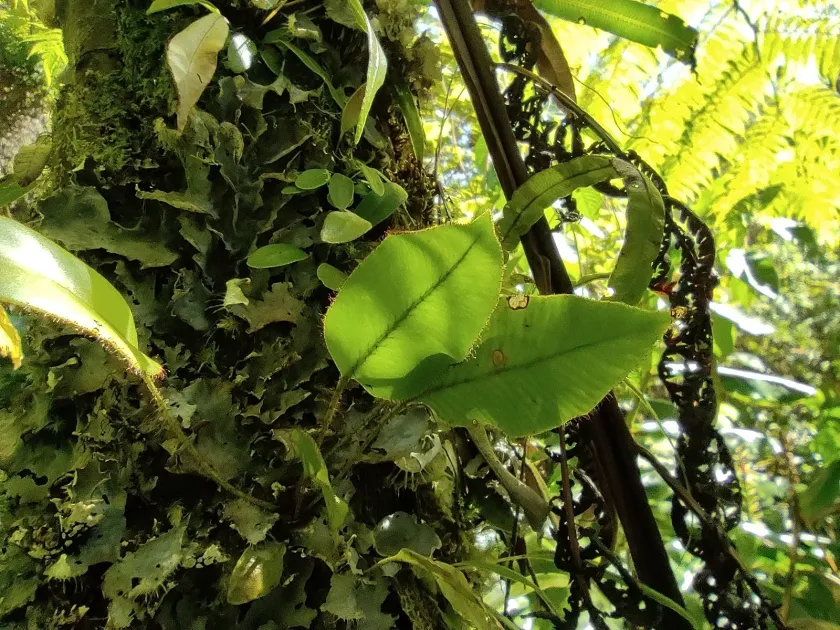
Elaphoglossum hybridum is a distinctive fern belonging to the Lomariopsidaceae family. Native to the tropical rainforests of South America, this species primarily functions as an epiphyte, attaching itself to trees and growing in environments with high humidity and filtered, consistent light.
To cultivate this fern successfully, one must replicate its natural humid habitat. Maintaining an ambient humidity level of at least 75% is critical; therefore, placing the plant in a terrarium or near an ultrasonic humidifier is highly recommended to prevent leaf desiccation.
The potting medium must be porous and well-draining, mimicking the organic debris found on tree branches. A mix containing orchid bark, perlite, chopped sphagnum moss, and charcoal provides the ideal balance of moisture retention and root aeration required by this species.
Temperature control is essential for the healthy development of Elaphoglossum hybridum. The plant thrives best in temperatures ranging from 18 to 25 degrees Celsius, avoiding any exposure to sudden cold drafts or extreme heat that could damage its leathery, dark green fronds.
Watering should be performed consistently, ensuring the substrate remains evenly moist throughout. Using reverse osmosis or distilled water is preferred, as these ferns can be sensitive to the chlorine and mineral salts often found in standard tap water supplies.
Main diseases and pests
Common pests include scale insects and mealybugs, which are often attracted to the dense foliage of the fern. If detected, prompt treatment with horticultural soap or neem oil is necessary to protect the plant from structural damage and loss of vigor.
Fungal pathogens and root rot are the most serious threats caused by overwatering or poor drainage. Ensuring that the crown of the plant is not kept in standing water and promoting adequate air circulation around the foliage will significantly reduce the risk of infection.