
Elaphoglossum apodum
Elaphoglossum apodum
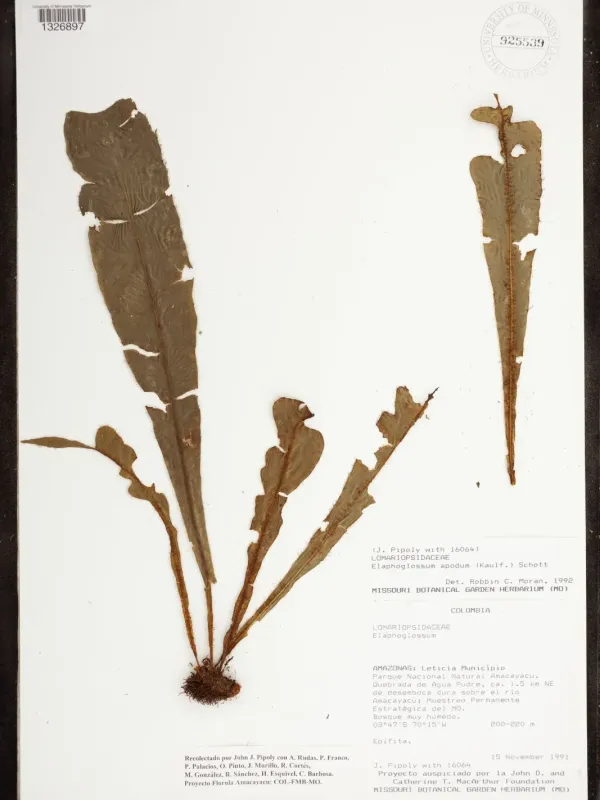
Description
Growing requirements
Elaphoglossum apodum is an epiphytic fern belonging to the Polypodiaceae family. Originating from the tropical regions of the Caribbean and South America, it thrives in environments characterized by high humidity and consistent moisture.
For successful cultivation, the plant requires a stable temperature range of 20–25 degrees Celsius. It is highly sensitive to temperature fluctuations and cold drafts, which can cause significant physiological stress to the fern's structure.
The substrate must be light, airy, and capable of retaining moisture without becoming waterlogged. A mixture of sphagnum moss, orchid bark, and perlite provides the ideal medium to mimic the natural epiphytic conditions this plant requires to grow.
Lighting should be bright but indirect. Intense direct sunlight can scorch the fronds, while extremely low light levels will result in slow growth and a loss of the plant's characteristic vibrant foliage texture.
In ornamental horticulture, this species is prized for its elegant form and adaptability to terrarium culture. It serves as an excellent addition to specialized botanical displays and private collections focusing on rare tropical flora.
Main diseases and pests
Root rot is the most common threat to Elaphoglossum apodum, usually caused by improper watering practices or poorly draining substrate. Maintaining an optimal balance between moisture and aeration is essential to protect the root system.
Spider mites are common pests that thrive in dry environments. If the relative humidity drops too low, these insects can quickly infest the undersides of the fronds, causing visible damage and decline in the plant's health.
Scale insects can also infest the stems and leaves of the fern. If detected early, these can be managed through mechanical removal or mild horticultural soaps, ensuring the treatment does not damage the delicate plant tissue.
Fungal leaf spots may occur in conditions with stagnant air and high humidity. Improving airflow around the plant helps mitigate this risk, allowing the fronds to dry slightly and preventing the colonization of pathogens.
Water quality plays a significant role in long-term plant health. Using distilled or rainwater is recommended to avoid the buildup of salts and minerals in the growing medium, which can lead to tip burn and root system impairment.