
Elaphoglossum eximium
Elaphoglossum eximium
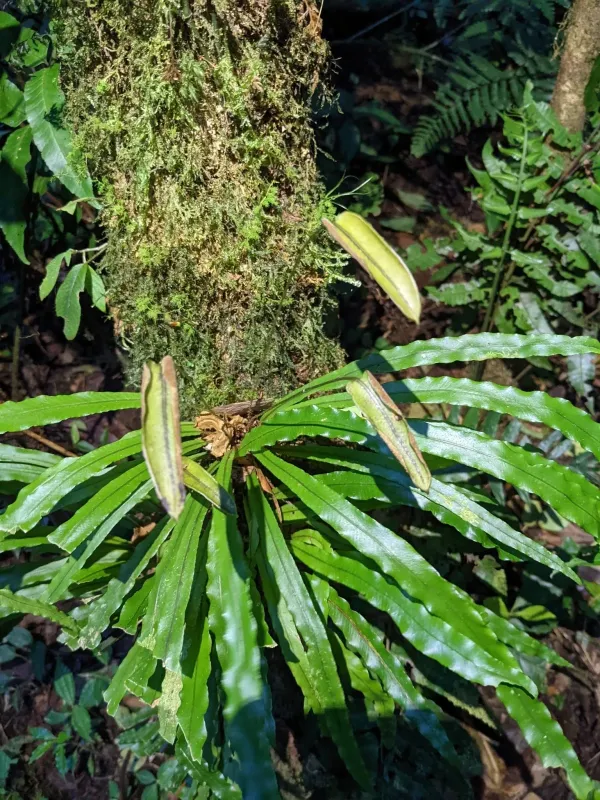
Description
Growing requirements
Elaphoglossum eximium is a distinctive fern species within the Polypodiaceae (or Lomariopsidaceae) family, native to the tropical forests of Central and South America. As an epiphyte, it naturally grows on mossy tree branches, thriving in high-humidity environments characterized by consistent tropical moisture and diffused light.
The cultivation of this fern requires a specialized environment. It is best suited for terrariums, vivariums, or climate-controlled greenhouses where humidity levels can be strictly maintained between 70% and 90%. In standard room conditions, the fronds tend to desiccate rapidly, leading to the decline of the plant.
Light requirements for this species are moderate. It prefers bright, filtered light and should be protected from direct sunlight, which causes severe leaf scorching. North-facing or shaded positions are ideal, ensuring that the photosynthetic needs are met without thermal stress.
The growing medium must be highly porous to support the epiphytic nature of the roots. A mix consisting of long-fiber sphagnum moss, orchid bark, and perlite provides the necessary aeration and moisture retention. The pot should have excellent drainage to prevent root suffocation.
Watering should be performed with filtered or distilled water, as ferns are often sensitive to minerals and salts found in tap water. The substrate should be kept consistently moist to the touch, but never waterlogged. Misting the foliage with soft water is beneficial to maintain the required atmospheric humidity levels.
Main diseases and pests
The most common pests affecting Elaphoglossum eximium include spider mites, which thrive in low-humidity conditions, and scale insects. Regular inspection of the undersides of the fronds is essential for early detection and manual removal of these pests.
Fungal pathogens represent a significant threat if the ventilation is inadequate. Root rot, caused by overwatering, can destroy the plant's health quickly. To mitigate these risks, ensure good air circulation around the foliage and avoid excessive moisture accumulation on the surface of the fronds.