
Echeveria gilva peacockii
Echeveria x gilva E. Walther x Echeveria peacockii Croucher ex T. Moore & Mast.
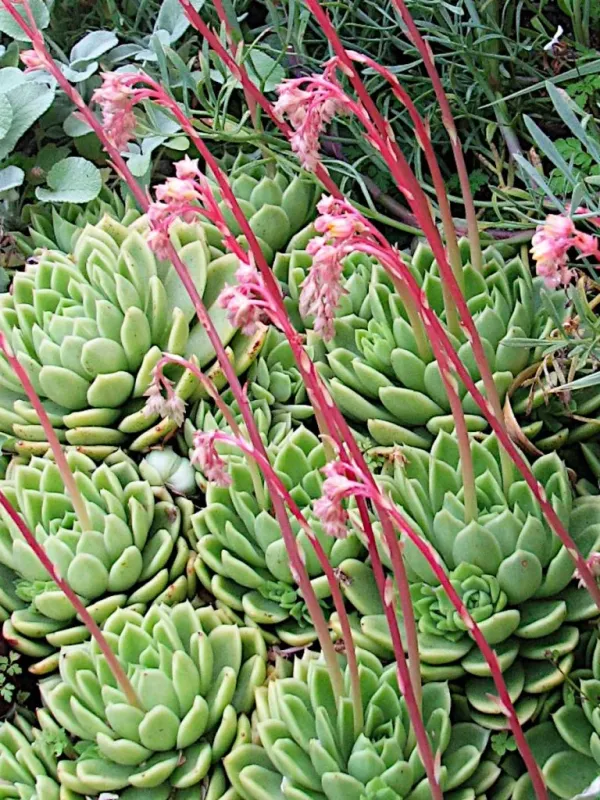
Description
Growing requirements
Echeveria gilva x peacockii is a striking hybrid succulent belonging to the Crassulaceae family, characterized by its elegant, densely packed leaf rosettes. The foliage often displays a glaucous, blue-grey appearance with delicate reddish margins that intensify under high light exposure.
For optimal health and aesthetic growth, this plant requires abundant bright, indirect light or direct morning sunlight. Inadequate light levels will lead to etiolation, where the plant stretches and loses its characteristic compact rosette shape, making it vulnerable to stem weakness.
The substrate must be highly porous and inorganic-heavy to ensure rapid drainage. A mixture containing pumice, coarse perlite, and sand is highly recommended for cultivating this Echeveria, as it prevents the water retention that leads to root rot.
Temperature requirements are standard for most Echeverias, favoring a range of +20°C to +25°C during the active growing season. During the winter months, the plant benefits from a cool dormancy period, with temperatures kept between +10°C and +15°C and minimal water.
Irrigation should be performed using the soak-and-dry method, ensuring the soil is completely dehydrated before the next watering session. It is crucial to maintain a dry environment for the foliage, as moisture trapped between leaves can cause immediate damage and rot.
Main diseases and pests
The most significant threat to Echeveria gilva x peacockii is excessive soil moisture, which often leads to root rot. If the roots become compromised, the plant will fail to absorb nutrients, and the rosette will eventually detach from the root system due to tissue necrosis.
Mealybugs are the most common pests, frequently found in the leaf axils where they form white, cottony masses. These pests cause systemic damage by extracting plant fluids and weakening the organism, often leading to secondary fungal infections.
Root mealybugs present a more insidious threat, as they live within the soil medium and attack the root system directly. Periodic inspection of the roots and the use of systemic insecticides are necessary if infestation is suspected to prevent plant decline.
Fungal leaf spot can occur if airflow is poor and humidity remains too high around the plant. Proper ventilation is essential to maintain dry foliage and prevent the spores of pathogenic fungi from colonizing the succulent's epidermis.
To ensure long-term success, use sterile tools for propagation and pruning. Always quarantine new plants before introducing them into an existing collection to prevent the spread of pests or pathogens that could compromise the health of the entire crop.