
Echeveria gilva
Echeveria x gilva E. Walther x Echeveria lutea Rose
Description
Growing requirements
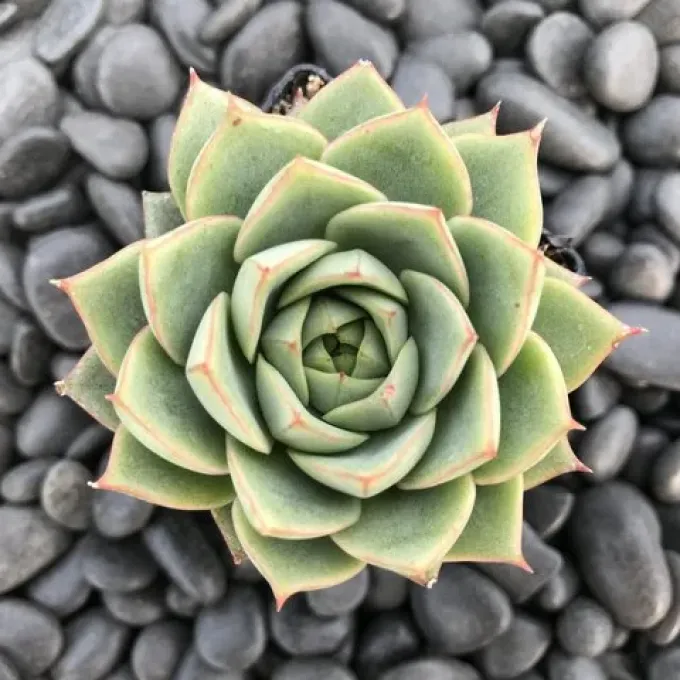
Echeveria gilva (Echeveria x gilva) is a stunning interspecific hybrid belonging to the Crassulaceae family. This perennial succulent plant naturally inhabits the mountainous regions of Mexico, where it thrives in well-drained, rocky soil environments.
Successful cultivation requires intense sunlight, as insufficient light causes the rosette to stretch and lose its compact, sculptural form. The plant demonstrates high drought tolerance due to its ability to store water within its fleshy, succulent leaves arranged in a tight basal rosette.
The optimal temperature range for Echeveria during the growing season is between +20 and +26 degrees Celsius. In winter, the plant requires a cooling period at temperatures around +10...+12 degrees, which promotes flower stalk development and prepares the plant for the upcoming season.
The planting substrate must be loose and highly permeable, typically incorporating coarse sand or perlite to prevent moisture stagnation around the root system. A neutral to slightly acidic pH is critical for the development of robust, thick leaves covered in a protective waxy bloom.
Standard care involves moderate watering directly at the base, ensuring no water enters the center of the rosette to prevent rot. The plant rarely requires fertilization, with a single application of specialized succulent mineral fertilizer per month being sufficient during the active growth period.
Main diseases and pests
The primary pest affecting Echeveria gilva is the mealybug, which infests leaf axils and extracts plant juices, significantly stunting growth. Root mealybugs may also occur, necessitating a complete substrate replacement and insecticide treatment.
Systematic overwatering leads to root and stem rot. Fungal pathogens, such as Fusarium, spread rapidly in stagnant, cold air environments, making proper air ventilation and circulation essential for the plant's long-term health.
Leaf damage often occurs due to physical impact or sunburn when the plant is moved abruptly from shade to direct sunlight. Disease prevention is largely based on maintaining a strict watering regimen and using sterilized potting soil during repotting processes.
In indoor environments, Echeveria may be susceptible to spider mites, especially in dry and hot conditions. To manage such infestations, it is recommended to use systemic insecticides while strictly adhering to the dosage instructions provided by the manufacturer.
The overall health of the plant depends on the drainage system quality, as Echeveria is extremely sensitive to salt accumulation in the soil. Regular removal of withered lower leaves prevents mold growth and encourages the development of healthy young offsets.