
Echeveria violescens
Echeveria violescens
Description
Growing requirements
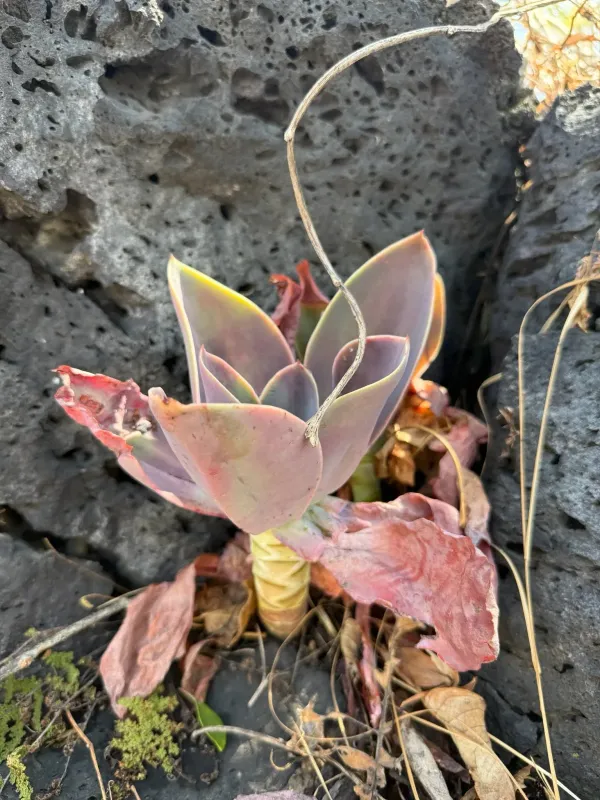
Echeveria violescens is a distinct species within the Crassulaceae family, valued for its rosette-forming succulent foliage that exhibits deep purple or lavender hues under proper light exposure.
Native to the arid regions of Mexico, this plant has evolved to thrive in rocky, well-draining soils with minimal water requirements, making it a classic xerophytic crop.
Successful cultivation requires high levels of solar irradiance to maintain its compact growth habit and vibrant leaf coloration, which can fade if the plant is kept in shade.
The substrate must be highly porous; agricultural recommendations suggest using a mix of volcanic pumice, perlite, and a small portion of organic potting soil to ensure rapid drainage.
During the growing season, deep and infrequent watering is necessary, allowing the substrate to completely dry out between cycles to mimic the natural precipitation patterns of its habitat.
Main diseases and pests
Root rot is the most significant threat to the health of Echeveria violescens, typically caused by waterlogged soil conditions and a lack of adequate ventilation around the root zone.
Mealybugs are the primary pest concern, as these insects often hide deep within the dense rosettes where they feed on the succulent tissue, potentially transmitting viral diseases.
In low light and high humidity environments, the plant becomes susceptible to fungal infections that cause the leaves to turn mushy and discolor, leading to rapid decay.
Maintaining a clean growing environment by removing dead or drying lower leaves is essential to reduce the risk of nesting sites for pests and pathogens.
Integrated pest management should prioritize physical removal and the use of targeted systemic treatments that are safe for the plant's delicate farina or waxy coating.