
Echeveria cante
Echeveria cante
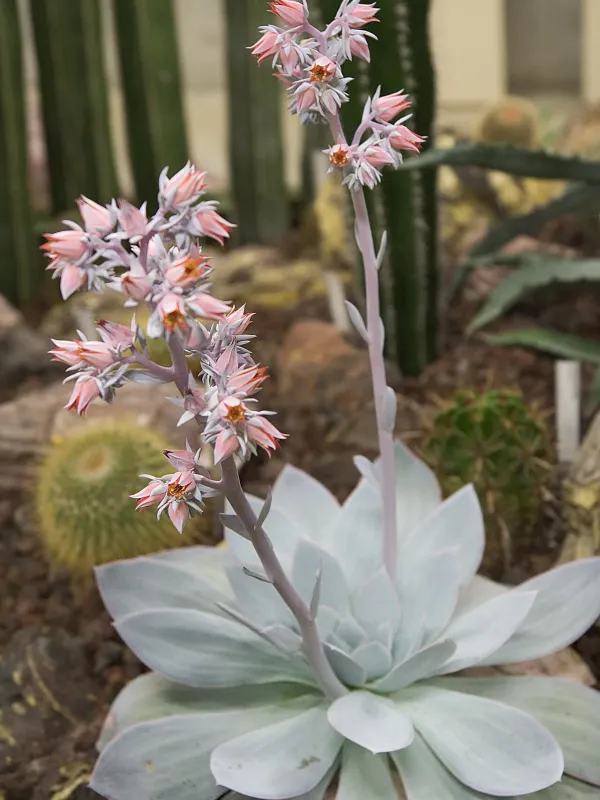
Description
Growing requirements
Echeveria cante is a prized succulent belonging to the Crassulaceae family, native to the high-altitude regions of Mexico. This plant is renowned for its large, symmetrical rosettes covered in a thick, powdery farina, which serves as a natural sunscreen in its native habitat.
To cultivate this species successfully, high light intensity is non-negotiable. Without adequate sunlight, the rosettes will lose their structural integrity, becoming etiolated and pale, which drastically reduces the market value and ornamental appeal of the specimen.
Soil composition must prioritize drainage above all else. Professional growers utilize porous, mineral-rich substrates consisting of pumice, coarse sand, and a minimal amount of organic potting mix to ensure that roots are never sitting in water for prolonged periods.
Watering requires strict adherence to the soak-and-dry method. During the active growing season, water should be applied only when the substrate has dried out completely. In winter, the plant enters dormancy, and watering should be reduced to a near-zero frequency.
The primary use of Echeveria cante is in the horticultural trade, specifically for high-end succulent collections and interior design. Its architectural form makes it a focal point in xeriscaping or modern container arrangements where low water use is preferred.
Main diseases and pests
The most significant threat to the health of Echeveria cante is overwatering. Excess moisture in the soil leads to rapid root rot, which is often difficult to detect until it has spread to the stem and leaves, making recovery of the plant extremely unlikely.
Mealybugs are the most common pest found in commercial and residential settings. They tend to hide in the tight spaces between the succulent leaves, where their feeding patterns result in scarring and stunted development of the new growth.
Spider mites can also be a challenge, particularly in greenhouse environments with low humidity. These pests thrive in dry conditions and can cause fine stippling on the leaves, which detracts from the plant’s pristine powdery appearance.
Fungal pathogens and leaf spot diseases can emerge if the ambient humidity remains too high and airflow is stagnant. Proper ventilation is essential to keep the rosettes dry and prevent the spores from colonizing the delicate leaf tissues.
Chemical intervention should be approached with caution due to the sensitive nature of the farina. When treating for pests or disease, ensure that the application does not destroy the natural protective coating that gives the plant its distinctive frosty look.