
Echeveria fulgens
Echeveria fulgens
Description
Growing requirements
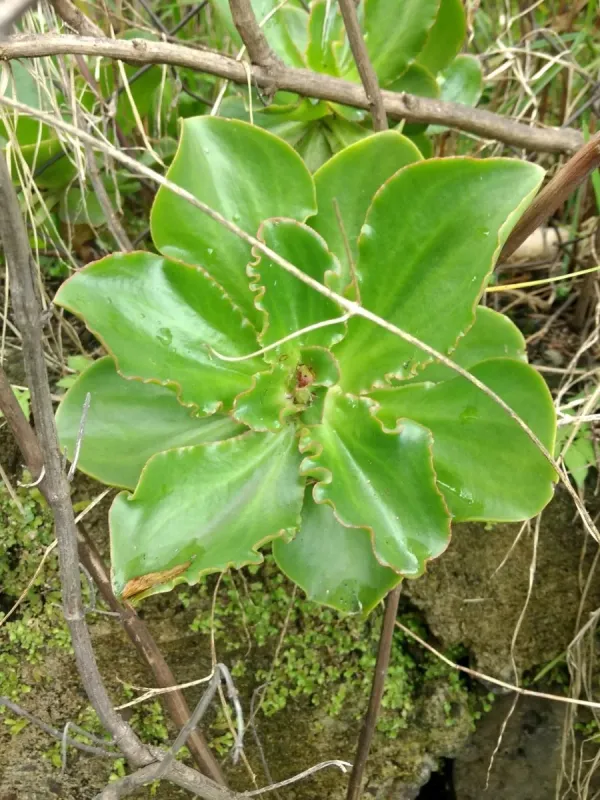
Echeveria fulgens is a perennial succulent belonging to the Crassulaceae family, native to the rocky and mountainous regions of Mexico. This plant is evolutionarily adapted to harsh environments where water is scarce and drainage is immediate.
The plant is defined by its fleshy, succulent leaves arranged in a tight, symmetrical rosette. These leaves often feature a natural powdery or waxy cuticle, which acts as a protective layer against intense UV radiation and minimizes transpirational water loss.
Optimal growth requires bright, indirect sunlight to maintain the plant's compact form and vibrant color. If placed in environments with insufficient light, the plant will become etiolated, causing the stems to stretch and the leaf density to decrease significantly.
Soil requirements for Echeveria fulgens center on high permeability and rapid drainage. A mixture composed of coarse sand, pumice, or perlite combined with a minimal amount of organic matter is ideal for preventing root suffocation and long-term waterlogging.
Watering protocols must follow a soak-and-dry approach. It is crucial to allow the substrate to dry out completely between waterings, as the plant stores moisture in its leaves and is highly susceptible to root rot if kept in a constantly moist medium.
Main diseases and pests
Root rot and crown rot are the most common pathological threats to Echeveria fulgens, usually precipitated by overwatering or poor ventilation. These fungal conditions can spread rapidly, leading to the collapse of the entire rosette within a short period.
Mealybugs remain the primary insect pest, often clustering in the tight axils of the leaves where they are shielded from physical removal. Their feeding weakens the plant and promotes the growth of secondary mold on the honeydew they secrete.
Spider mites can also become a problem in low-humidity environments, causing fine webbing and chlorotic spots on the leaves. Regular inspection and maintaining good airflow are effective non-chemical strategies for managing these pest populations.
Environmental stress, such as sudden shifts in temperature or prolonged lack of airflow, significantly reduces the plant's natural resistance. Maintaining stable conditions helps the Echeveria keep its internal defenses robust against opportunistic infections.
Over-fertilization represents a major cultural mistake. Providing excessive nutrients leads to bloated, fragile tissue that is prone to cracking and makes the plant an easy target for pathogens and pests, ultimately reducing its overall longevity.