
Echeveria turgida
Echeveria turgida
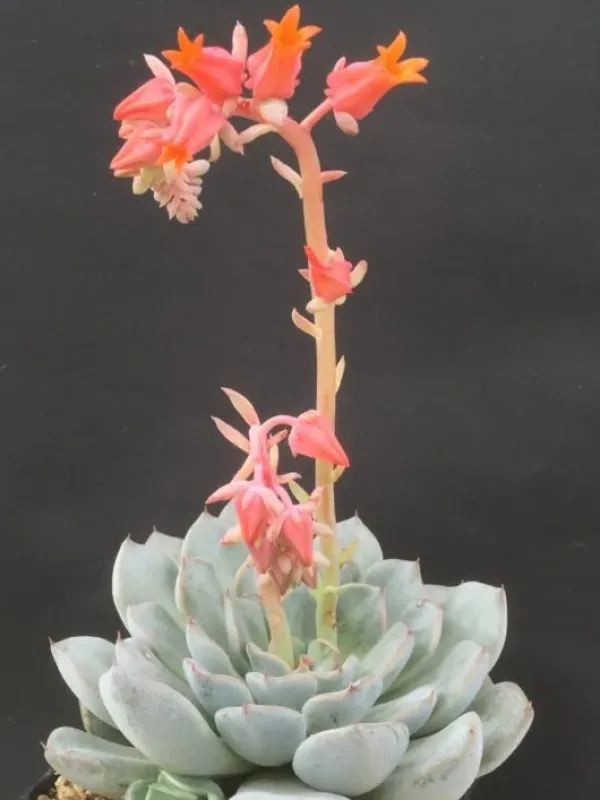
Description
Growing requirements
Echeveria turgida is a succulent species belonging to the Crassulaceae family. It is recognized for its rosette-forming habit, which features fleshy leaves designed for water retention in arid environments.
Native to the rocky terrains of Mexico, this species thrives in environments where sunlight is plentiful and moisture is sparse. Its botanical structure is a perfect adaptation to high-altitude, rocky soil conditions.
The primary growth requirement for Echeveria turgida is high-intensity light. Without adequate light, the plant will become etiolated, losing its compact shape and becoming structurally weak.
The substrate must provide excellent aeration and drainage. A standard succulent potting mix, amended with non-organic material like pumice or coarse sand, ensures that roots remain healthy and free from water-logging.
Climate preferences include warm daytime temperatures and cooler nighttime periods. During winter, the plant enters a semi-dormant state and requires lower temperatures and minimal water to remain healthy.
Main diseases and pests
The most critical threat to Echeveria turgida is root rot, caused by excessive moisture in the soil or standing water trapped within the dense leaf rosette.
Mealybugs are the most common pests affecting this species. They hide in the tight spaces between leaves, causing yellowing and stunted growth of the plant by feeding on plant sap.
Spider mites can also be a significant issue in low-humidity environments. Their feeding activity creates tiny yellow spots on the leaves, which eventually lead to necrotic patches if left untreated.
Effective management involves manual removal of pests or the application of horticultural soaps and systemic insecticides. Always ensure the plant is sufficiently dry before applying any liquid treatments.
Preventive maintenance consists of maintaining good air circulation and adhering to strict watering schedules, ensuring the soil dries out completely between waterings to discourage rot and fungal growth.