
Echeveria tolimanensis
Echeveria tolimanensis Matuda
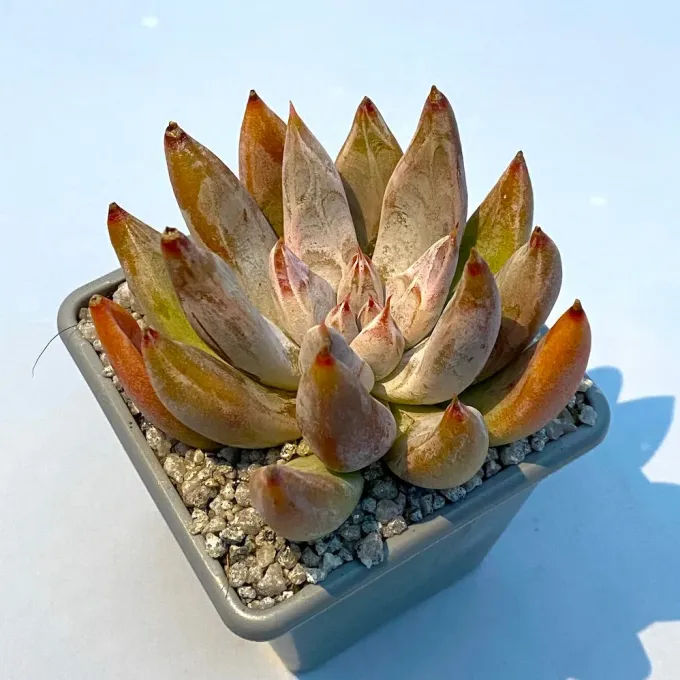
Description
Sowing dates
Propagation of Echeveria tolimanensis is typically achieved through vegetative methods such as leaf cuttings or offsetting pups. The most successful period for these procedures is during the active growing season in late spring or early summer.
Seed propagation is also possible but requires specialized laboratory-like conditions to maintain high germination rates. Seeds are sown on the surface of a sterile, sandy medium and kept under consistent moisture until sprout emergence.
Young seedlings are extremely sensitive to environmental shifts and require protection from harsh direct sunlight. Gradual hardening-off is necessary to transition the young plants to standard succulent cultivation conditions.
When using leaf cuttings, it is vital to allow the base of the leaf to callus over for several days before placing it into the substrate. This practice significantly reduces the likelihood of rotting due to soil-borne pathogens.
Root development usually occurs within a few weeks when provided with bright, indirect light and stable temperatures. Once roots are established, the plant should be gradually transitioned to a standard deep-watering, dry-soil cycle.
Growing requirements
Belonging to the Crassulaceae family, Echeveria tolimanensis originates from the rocky mountain regions of Mexico. It requires a highly porous soil mix that ensures rapid drainage, such as a combination of grit, pumice, and minimal organic matter.
Exposure to intense sunlight is mandatory for maintaining the plant's characteristic compact growth habit. Inadequate light results in etiolation, where the plant loses its dense structure and becomes unsightly.
Temperature management follows a seasonal cycle, with active growth occurring at 20–25 degrees Celsius. A winter dormant phase at 10–12 degrees Celsius is beneficial for the plant's long-term health and encourages future flowering.
The irrigation schedule must be strictly controlled, with the soil allowed to dry out completely between waterings. Overhead watering should be avoided to prevent water droplets from pooling in the center of the leaf rosette.
Humidity requirements are low, as the plant is well-adapted to the arid climates of its native habitat. Proper air circulation is more important than air humidity for preventing fungal issues in a home environment.
Main diseases and pests
The most significant threat to the survival of Echeveria tolimanensis is root and crown rot, primarily induced by overwatering. Once rot begins, it can quickly spread to the entire stem, making it difficult to save the plant.
Mealybugs are a common pest problem, often congregating in the hidden spaces between the tightly packed leaves. Their presence can severely weaken the plant and lead to secondary bacterial infections.
Aphids can occasionally attack the plant's inflorescences when it is in bloom. Careful monitoring during the flowering season is advised to address any infestations early using systemic insecticides.
Poor ventilation often leads to the growth of fungal pathogens on the soil surface, which can compromise the root system's health. Improving airflow is a simple yet effective prophylactic measure.
Regular maintenance, including the removal of dead or decaying lower leaves, helps prevent the accumulation of moisture. Keeping the base of the plant clean significantly reduces the risk of pest and disease outbreaks.