
Echeveria strictiflora
Echeveria strictiflora A. Gray
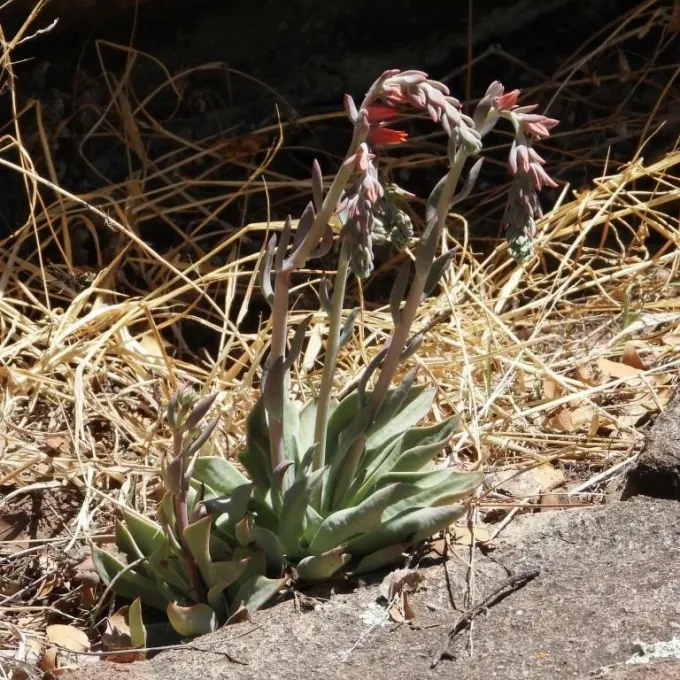
Description
Growing requirements
Echeveria strictiflora is a perennial succulent belonging to the Crassulaceae family. Native to the rocky, arid environments of northern Mexico and parts of the United States, this species has evolved to withstand long periods of drought and high solar exposure, making it a highly resilient ornamental crop.
Botanically, it features a rosette of succulent leaves that serve as water storage organs. The most distinguishing characteristic is its inflorescence, which produces rigid stems bearing tubular, vibrant flowers, setting it apart from more common, soft-leaved Echeveria varieties that are widely available in the horticultural trade.
The agricultural cultivation of this species requires a porous and well-draining substrate to mimic its natural rocky habitat. A mixture of potting soil, coarse sand, and perlite is recommended. Proper drainage is essential to prevent root asphyxiation, as the plant is highly susceptible to root rot if left in saturated conditions.
As a light-demanding species, Echeveria strictiflora requires full sun or bright, filtered light to maintain its characteristic compact shape. Insufficient light leads to etiolation, a condition where the stem stretches unnaturally and leaves lose their firm, robust structure, reducing the overall aesthetic value of the plant.
Watering management is the cornerstone of its care. It follows a "soak and dry" method, where the substrate must be completely desiccated before the next irrigation. During the winter dormancy phase, the plant requires very little water to survive, as this period triggers the physiological processes necessary for spring blooming.
Main diseases and pests
Mealybugs are the primary pests that affect Echeveria strictiflora, often colonizing the crevices of the leaves and the base of the stem. Physical removal with cotton swabs dipped in alcohol or the application of systemic pesticides is necessary to protect the plant from structural damage and sap loss.
The main threat to the health of this culture is fungal infection caused by improper watering practices. High humidity combined with poor airflow often leads to stem rot or leaf drop. Keeping the crown of the plant dry and ensuring good ventilation is the most effective preventative measure against these diseases.