
Echeveria shaviana
Echeveria shaviana E. Walther
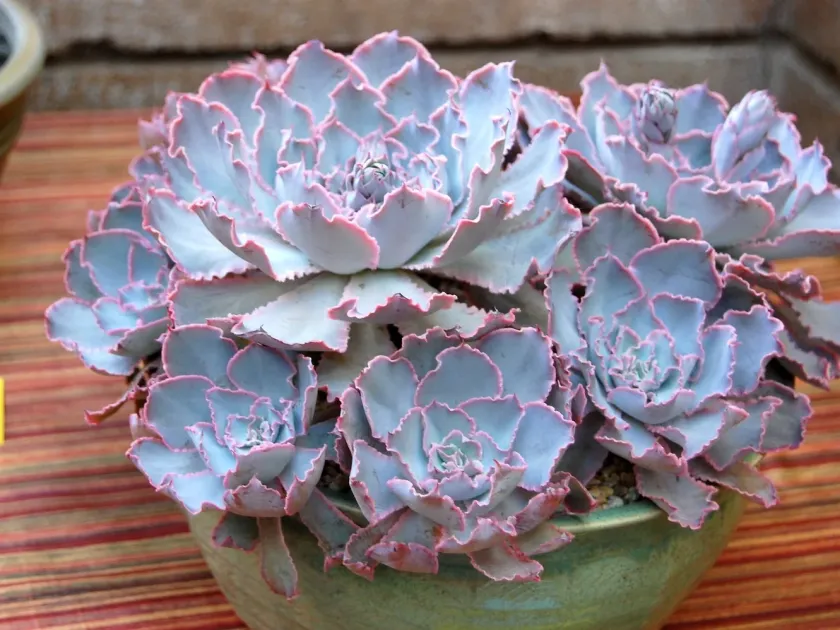
Description
Growing requirements
Echeveria shaviana is a captivating succulent species native to the rocky highlands of Mexico, belonging to the Crassulaceae family. It is widely valued by enthusiasts for its delicate, wavy-edged leaves that form beautiful, tight rosettes often displaying lovely blue-green or pinkish tones.
Botanically, this plant thrives in environments that mimic its natural habitat, requiring high levels of solar irradiance to maintain its structural integrity and distinct leaf coloration. Without sufficient light, the plant becomes leggy, losing its compact and ornamental shape significantly.
The substrate must be exceptionally well-draining, as the roots are highly susceptible to rot if they remain damp for extended periods. A mixture consisting of cactus potting soil, coarse grit, perlite, and pumice is considered ideal to provide the necessary aeration and moisture regulation.
Temperature requirements for Echeveria shaviana include a warm, dry growing season and a cooler resting period in winter to mimic natural cycles. Maintaining temperatures around 10–15°C during the winter months helps the plant prepare for the subsequent flowering phase in spring.
Watering should be performed using the soak-and-dry method, ensuring the soil is entirely dehydrated before applying further water. It is critical to keep the center of the rosette dry, as trapped water easily triggers fungal growth and necrosis of the crown tissue.
Main diseases and pests
The most significant threat to Echeveria shaviana is root rot caused by stagnant moisture in the substrate or excessive ambient humidity. Constant monitoring of leaf firmness and soil moisture is essential for preventing the rapid decline of the plant due to fungal pathogens.
Mealybugs are the most common insect pests that infest the plant, typically hiding in the crevices between the wavy leaves where they are difficult to reach. Their presence can be identified by fine white cottony masses, requiring targeted treatment with systemic insecticides or isopropyl alcohol.
Spider mites may occasionally occur, especially in low-humidity environments, causing stippling and disfigurement on the leaf surface. Frequent inspection and maintaining proper air circulation around the plant are effective cultural practices to deter these pests from settling.
Air quality and ventilation play a vital role in disease prevention; poor airflow often leads to the development of powdery mildew or other surface molds. Keeping the planting area clean and well-ventilated reduces the incidence of these opportunistic infections.
Using fertilizers improperly, specifically those with high nitrogen content, causes rapid, weak growth that makes the plant more attractive to aphids and soft-bodied pests. Always utilize specialized low-nitrogen succulent fertilizers to ensure balanced and healthy development of the plant tissue.