
Echeveria secunda
Echeveria secunda Booth ex Lindl.
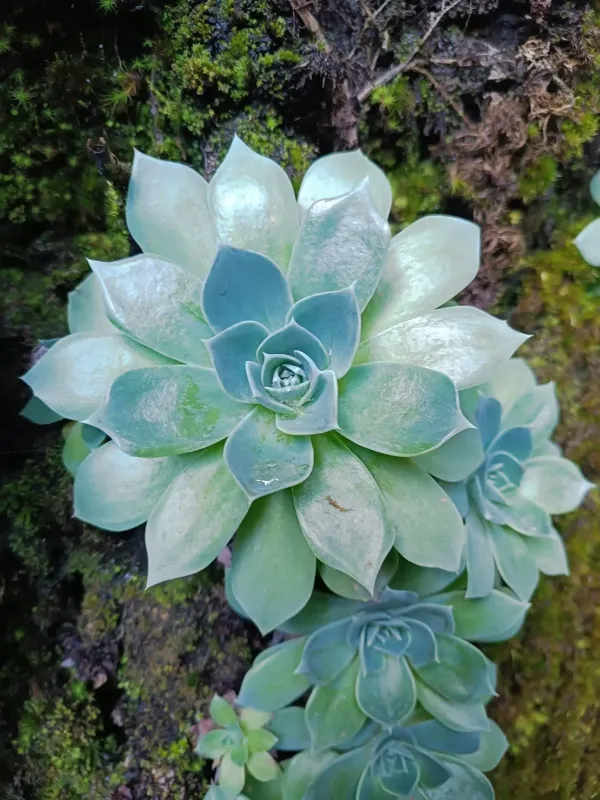
Description
Growing requirements
Echeveria secunda is a perennial succulent plant belonging to the Crassulaceae family. Originating from the mountainous regions of Mexico, this species has evolved to thrive in nutrient-poor, rocky substrates, making it a highly specialized plant that demands precise environmental conditions in cultivation.
Botanically, the plant is characterized by its compact, succulent rosettes of fleshy, spoon-shaped leaves. These leaves often feature a glaucus, waxy coating that serves as a protective layer, minimizing water loss through transpiration and protecting the plant from intense solar radiation.
For optimal growth, Echeveria secunda requires high levels of light intensity. In greenhouse or domestic settings, ensuring at least 6 to 8 hours of direct or filtered sunlight is crucial to maintain the plant's characteristic rosette form and prevent leggy, elongated stems that decrease its aesthetic value.
The substrate must prioritize drainage and aeration. A standard commercial potting mix is usually too moisture-retentive; therefore, it is advisable to incorporate coarse sand, pumice, or perlite at a ratio of 50% inorganic material to 50% organic substrate to emulate the rocky, well-draining soil of its natural habitat.
Irrigation practices are the most critical aspect of the plant's agrotechnology. The soak-and-dry method is recommended: the substrate should be allowed to dry completely before the next watering. During the dormant winter season, irrigation frequency should be drastically reduced to maintain the plant's metabolic stability.
Main diseases and pests
The primary agronomic risk associated with Echeveria secunda is root rot, typically caused by water accumulation within the substrate. This condition is often exacerbated by poor drainage or low ambient temperatures during the colder months, which slow down the plant's water uptake.
Mealybugs represent the most prevalent pest affecting this crop. These insects tend to colonize the tight spaces between leaves and the base of the rosette, where they extract plant sap and excrete a honeydew that fosters secondary fungal growth.
Fungal infections, such as those caused by Botrytis, may occur if the plant is kept in high-humidity conditions without proper air circulation. These infections typically manifest as dark, water-soaked spots on the foliage that spread rapidly if not addressed.
Integrated pest management should include regular inspection of the leaf axils and the use of physical barriers or targeted application of systemic insecticides where necessary, ensuring that the substances are safe for succulent tissues.
To ensure long-term health, growers must maintain proper air hygiene and prevent the accumulation of organic debris around the base of the plant, which serves as a breeding ground for pests and pathogens.