
Echeveria runyonii
Echeveria runyonii Rose ex E. Walther
Description
Growing requirements
Echeveria runyonii is a perennial succulent belonging to the Crassulaceae family. Originating from the arid regions of Mexico, this species has evolved to thrive in rocky, well-draining soils with limited water availability, making it a highly resilient indoor crop.
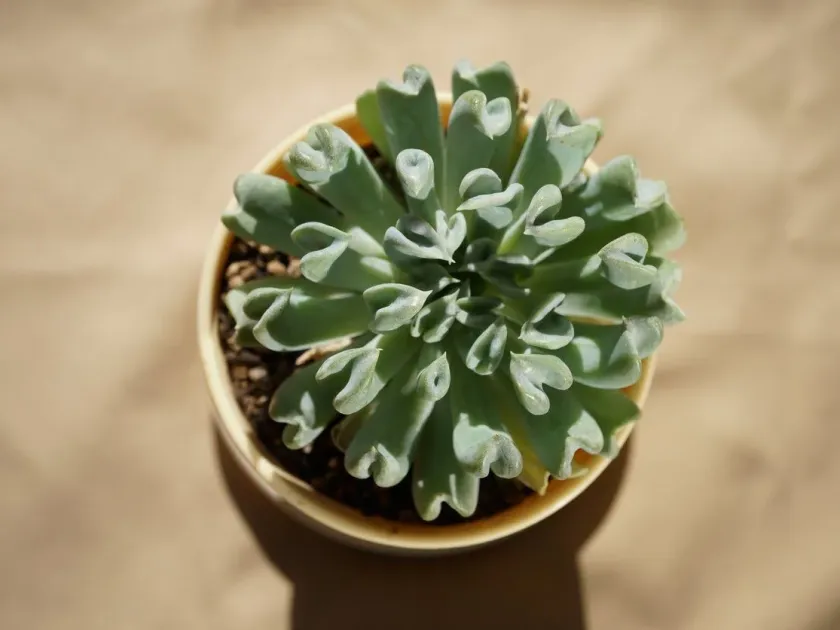
The plant features distinctively spoon-shaped, fleshy leaves arranged in a tight, geometric rosette. The epidermis is covered with a powdery glaucous coating, which serves as a natural barrier against intense UV radiation and minimizes transpirational water loss in its native habitat.
Cultivation requirements necessitate high light intensity to maintain the plant's compact form. If light levels are insufficient, the plant will exhibit etiolation, where the stem stretches and leaf spacing increases, significantly reducing its ornamental value.
The soil profile must prioritize aeration and drainage. A standard mix includes coarse sand, pumice, or perlite combined with a small fraction of organic potting soil. Proper drainage holes in the container are non-negotiable for the plant's health.
Watering practices should follow the soak-and-dry method. During the active growth phase, allow the substrate to dry out completely before supplying water again. In winter months, the plant enters dormancy, and watering frequency should be strictly limited.
Main diseases and pests
Root rot is the most critical threat to Echeveria runyonii, primarily caused by overwatering or poorly aerated soil substrates. This condition often results in the sudden collapse of the stem and leaves, making recovery difficult.
Mealybugs are the most common pests, often hiding in the crevices between leaves and at the base of the rosette. Their presence is marked by white, cotton-like masses, which can quickly compromise the plant's physiological functions.
Aphids can also infest the flower stalks during the blooming season. These pests can be managed by manual removal or the application of insecticidal soaps, ensuring that the treatment does not affect the delicate pruinose coating on the foliage.
Maintaining proper ventilation is essential for preventing fungal infections. Stagnant air coupled with high humidity provides an ideal environment for mold development, especially within the dense structure of the rosette.
Periodic inspection of the plant's root zone and leaf axils ensures early detection of potential threats. Maintaining cleanliness and removing dead or decaying lower leaves helps to prevent the spread of opportunistic pathogens.