
Echeveria racemosa
Echeveria racemosa
Description
Growing requirements
Echeveria racemosa is a succulent plant species belonging to the Crassulaceae family. It is native to the mountainous regions of Mexico, where it has adapted to harsh, arid conditions characterized by significant sunlight and limited water availability.
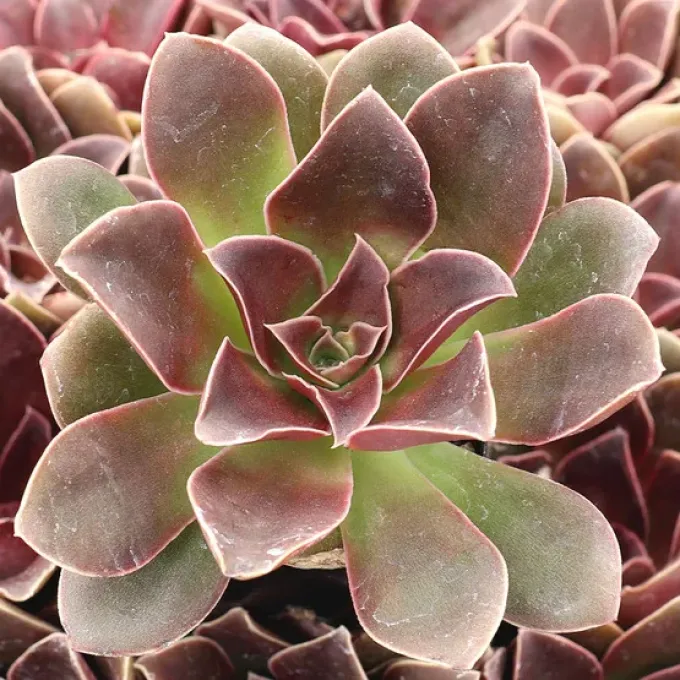
The plant features compact, fleshy leaf rosettes capable of storing water for long periods. This succulent adaptation makes it highly efficient in nutrient and water conservation, allowing it to thrive in nutrient-poor, rocky substrates.
Cultivation requirements involve providing a highly porous and well-draining soil mix. A blend of coarse sand, perlite, and a small portion of organic matter is ideal for ensuring that water does not accumulate around the root neck.
Regarding climatic needs, this species demands high levels of light throughout the year to maintain its characteristic compact form and leaf coloration. Excessive shade leads to etiolation and a weakened structure, which reduces the ornamental value of the plant.
In agricultural and horticultural practice, Echeveria racemosa is widely used in xeriscaping, container gardening, and indoor plant arrangements. It is valued for its unique morphology and relative ease of maintenance in home environments.
Main diseases and pests
Mealybugs are the most common pests that infest Echeveria racemosa, often hiding between the tightly packed leaves of the rosette. Regular inspection is crucial to prevent large-scale colonization.
Root rot is the most significant threat to plant health, typically caused by overwatering or poor drainage. Once root tissue begins to decay, the infection can quickly spread to the leaves, leading to the collapse of the entire rosette.
Effective pest management involves the use of systemic insecticides, while fungal issues should be addressed by immediately reducing moisture levels and removing affected plant parts.
To prevent disease outbreaks, it is necessary to avoid overhead watering, as water trapped in the center of the rosette can encourage bacterial and fungal growth.
Proper airflow is a critical prophylactic measure. Maintaining good ventilation helps ensure that surface moisture evaporates quickly, mitigating the risk of pathogen accumulation on the plant surface.