
Echeveria purpusiorum
Echeveria purpusiorum A. Berger
Description
Growing requirements
Echeveria purpusiorum is a perennial succulent belonging to the Crassulaceae family. It is native to the rocky, arid regions of Mexico, which has shaped its biological adaptations to extreme environmental stress, including high light intensity and limited water availability.
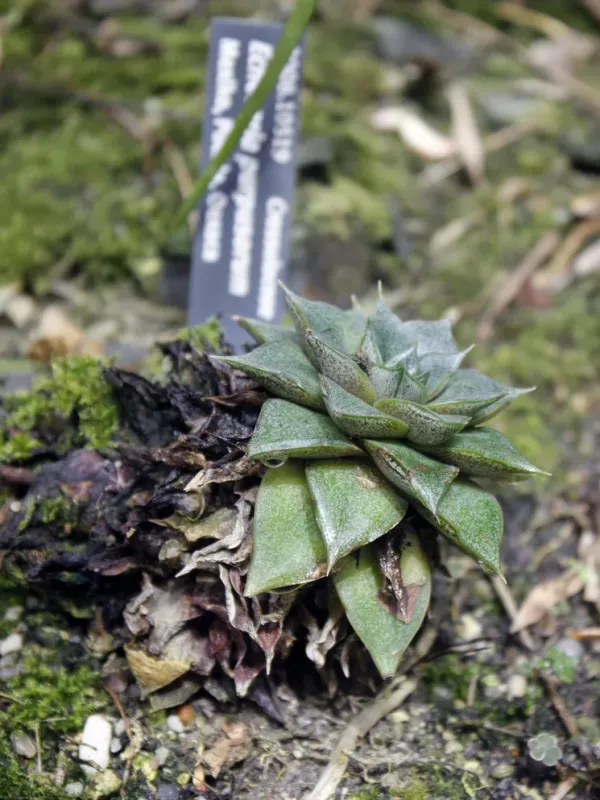
The plant is prized for its small, compact rosettes featuring thick, ovate leaves with distinct reddish-brown spotting. Due to its slow growth rate, it remains a collector's item and is well-suited for controlled container environments where drainage is prioritized.
Optimal cultivation requires a porous, well-draining substrate composed primarily of grit, pumice, or coarse sand. Traditional potting soil often retains too much moisture, which is fundamentally incompatible with the plant's natural physiological requirements.
Light requirements for this species are high. To maintain its natural coloration and compact form, it should receive several hours of direct morning or evening sunlight daily. Insufficient light leads to etiolation and loss of characteristic color patterns.
Temperature management is critical for the plant's life cycle. During the growing season, it thrives in temperatures between 20°C and 28°C. During the dormant winter period, cooling the environment to 10°C is essential for maintaining the metabolic rhythm.
Main diseases and pests
The primary threat to Echeveria purpusiorum is root rot caused by stagnant water in the root zone. High humidity combined with poor air circulation often creates the perfect environment for fungi such as Rhizoctonia or Fusarium.
Mealybugs (Pseudococcidae) pose a significant risk, frequently colonizing the center of the rosette or hidden areas near the base of the leaves. Infestations can spread quickly if not addressed with targeted systemic insecticides.
Pest prevention is best managed through strict quarantine protocols for new plants and regular visual inspections of the leaf axils. Physical removal using an alcohol-soaked swab can be effective for minor localized infestations.
Over-fertilization represents an agronomic risk. High nitrogen levels stimulate rapid tissue growth that is structurally weak and significantly more attractive to sap-sucking insects and fungal pathogens.
General hygiene in the cultivation area, including the removal of dead lower leaves, is essential. Decaying organic matter trapped near the base of the plant acts as a reservoir for pathogens and pests, compromising the overall health of the specimen.