
Echeveria peacockii-pulidonis
Echeveria peacockii Croucher ex T. Moore & Mast. x Echeveria pulidonis E. Walther
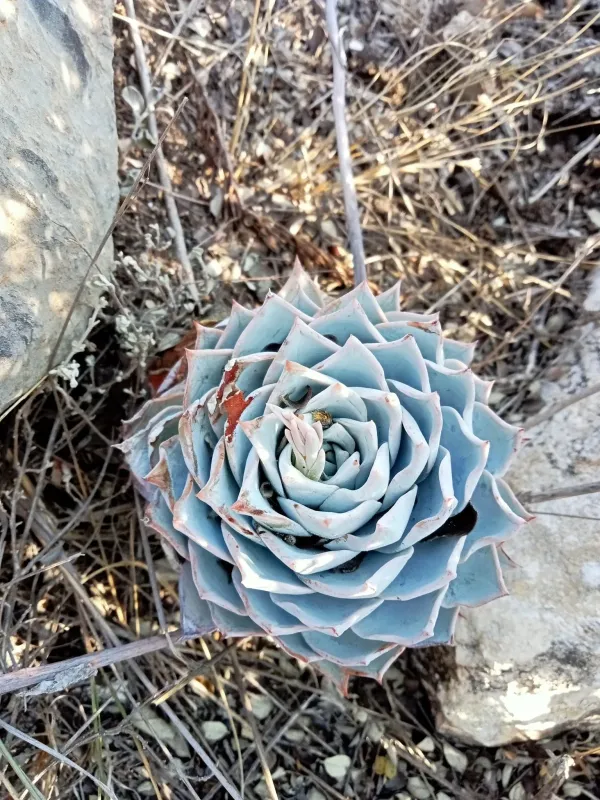
Description
Growing requirements
Echeveria peacockii-pulidonis is a distinctive hybrid succulent belonging to the Crassulaceae family. It originates from the intentional cross-breeding of Echeveria peacockii and Echeveria pulidonis, combining the elegant wax-coated leaves of the former with the striking leaf margins of the latter.
The cultural requirements for this plant focus on high light intensity. To maintain the tight, rosette shape and the characteristic color patterns, the plant requires significant exposure to direct sunlight or high-quality full-spectrum LED lighting in indoor environments.
Soil composition must prioritize drainage and aeration. A mix of inorganic materials such as pumice, coarse sand, and perlite, combined with a small fraction of organic matter, provides the optimal growth medium to avoid water retention around the roots.
Watering management is crucial for the health of the Echeveria. The "soak and dry" method is standard practice, ensuring that the substrate completely dries out between irrigation events to prevent root asphyxiation and subsequent rot.
During the dormant winter season, the plant benefits from a cool, dry environment. Maintaining temperatures between 5°C and 10°C triggers the plant's metabolic slow-down, which is essential for ensuring robust growth and flowering in the following season.
Main diseases and pests
The most common agricultural threats to Echeveria peacockii-pulidonis are related to moisture-dependent pathogens. Over-watering, especially during cooler periods, leads to crown rot, which can destroy the entire rosette structure within a few days.
Mealybugs are the primary pest concern for this species. These insects tend to hide in the tight crevices between leaves, making them difficult to detect and eradicate without systemic insecticides or manual removal using alcohol-dipped swabs.
Fungal infections can manifest as dark spots on the foliage, often triggered by overhead watering that leaves stagnant water in the leaf axils. Ensuring adequate airflow around the plant is the best preventive measure against these infections.
Root aphids may occasionally infest the root zone, particularly when substrate components are contaminated or imported from unreliable sources. Proactive soil sterilization or the use of specialized systemic soil drenches can effectively mitigate this risk.
Proper sanitation in the growing area, including the removal of dead or dried lower leaves, is essential to limit the breeding grounds for pests and the accumulation of mold, ensuring the longevity and health of the crop.