
Echeveria parva
Echeveria parva A. Berger
Description
Growing requirements
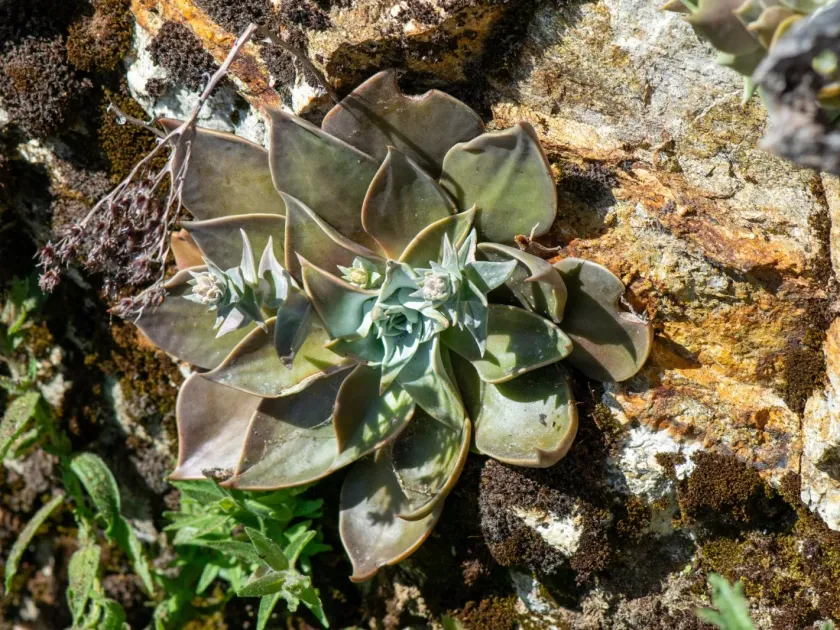
Echeveria parva (A. Berger) is a compact, perennial succulent species belonging to the Crassulaceae family. Native to the arid regions of Mexico, this plant has adapted to rocky, well-draining environments, allowing it to survive in harsh conditions with limited water availability.
The plant is distinguished by its small, dense rosettes of fleshy, lance-shaped leaves. These leaves often exhibit a subtle glaucous or bluish-green hue, sometimes tipped with reddish margins, which serves as a protective mechanism against intense solar radiation in its natural habitat.
To cultivate Echeveria parva effectively, a site with bright, indirect sunlight is essential. While it thrives in high light, exposure to scorching afternoon sun can damage the foliage. Proper light exposure is critical to maintaining the tight, attractive architecture of the rosette.
The growing medium must be highly porous and inorganic-heavy. A typical mix includes high portions of pumice, perlite, and coarse sand. Standard potting soil is too moisture-retentive and poses a high risk of root rot for this specific species.
Watering should be approached with caution using the soak-and-dry method. Ensure the substrate is completely dry before adding more water. During the winter dormancy period, the plant requires significantly less water and cooler temperatures to mimic its natural cycle.
Main diseases and pests
The most significant threat to Echeveria parva is root rot, resulting from overwatering or poorly draining soil. When the substrate remains wet for extended periods, the roots lose their ability to oxygenate, eventually leading to rapid tissue decay and plant death.
Mealybugs are the most common pest observed on Echeveria species. They cluster in the crevices between leaves, feeding on the plant's sap. Their presence is marked by a cottony, white substance, which can quickly spread to healthy parts of the plant if left untreated.
Spider mites can also become problematic in hot, dry environments. They cause stippling and discoloration on the leaf surface. Control involves maintaining proper air circulation and utilizing insecticidal soaps or horticultural oils during the early stages of infestation.
Fungal pathogens may thrive if the plant is kept in humid, stagnant air. Proper ventilation is vital to prevent leaf spot and crown rot, especially if water accidentally pools in the center of the rosette during watering procedures.
Regular sanitation, such as removing dead, dried lower leaves, is important. These decaying leaves can harbor pests or trap moisture, creating an environment suitable for bacterial growth and potential pathogens to infect the main stem.