
Echeveria nodulosa
Echeveria nodulosa (Baker) Ed. Otto
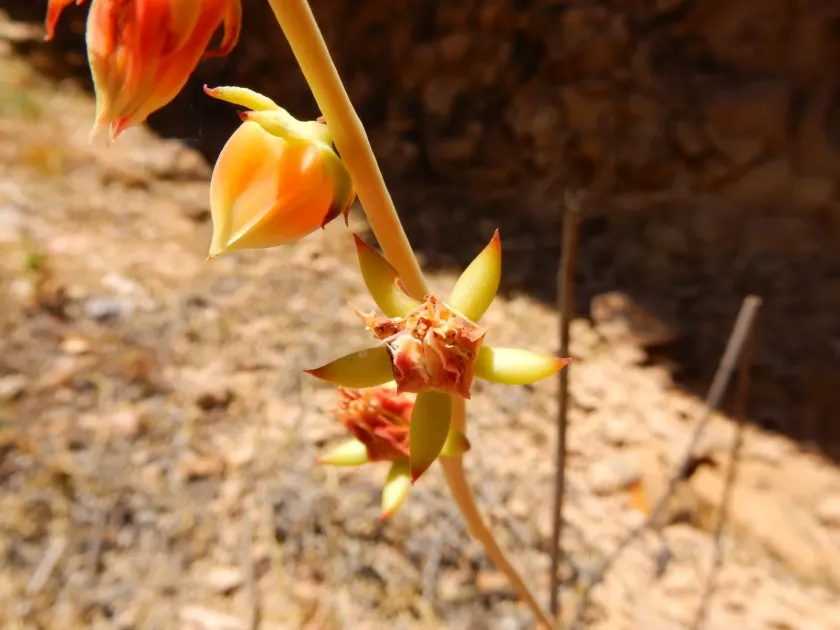
Description
Growing requirements
Echeveria nodulosa, a member of the Crassulaceae family, is a distinct succulent species originating from Mexico. It is widely recognized for its branching stems and rosettes featuring leaves marked with striking red patterns along the margins.
As a light-loving species, this plant requires high levels of solar radiation to maintain its structural integrity and vibrant pigmentation. In indoor settings, placing it in a south-facing window is essential for optimal development.
The substrate must be highly porous to ensure rapid drainage. A mix of potting soil, coarse grit, and perlite or pumice is recommended to replicate the rocky, arid habitats where this plant grows naturally in the wild.
Climate requirements involve warm temperatures during the growing season (spring and summer) and a distinct cool, dry dormancy period during the winter months, typically ranging between 10°C and 15°C.
Watering practices are critical: the "soak and dry" method is the standard. It is vital to allow the growing medium to dry out completely between waterings to prevent root death and stem rot caused by anaerobic conditions.
Main diseases and pests
The primary threat to the health of Echeveria nodulosa is overwatering, which quickly leads to fungal infections and root rot. Once the roots are compromised, the entire plant often succumbs to secondary bacterial pathogens.
Mealybugs are the most common insect pests associated with this species. They hide in the tight spaces between leaves and at the base of the stem, feeding on plant sap and weakening the overall vigor of the rosette.
Root aphids pose a hidden danger, often infesting the root zone and causing the plant to stop growing unexpectedly. Regular inspection of the root ball during repotting is necessary for early detection and mitigation.
Fungal leaf spot can occur if water remains trapped in the center of the leaf rosette for extended periods. This requires immediate removal of affected parts and improved airflow to dry out the plant tissue.
Prevention involves maintaining good cultural practices: proper lighting, adequate spacing between plants to ensure airflow, and the use of pest-free substrate mixtures to maintain long-term crop health.