
Echeveria moranii
Echeveria moranii
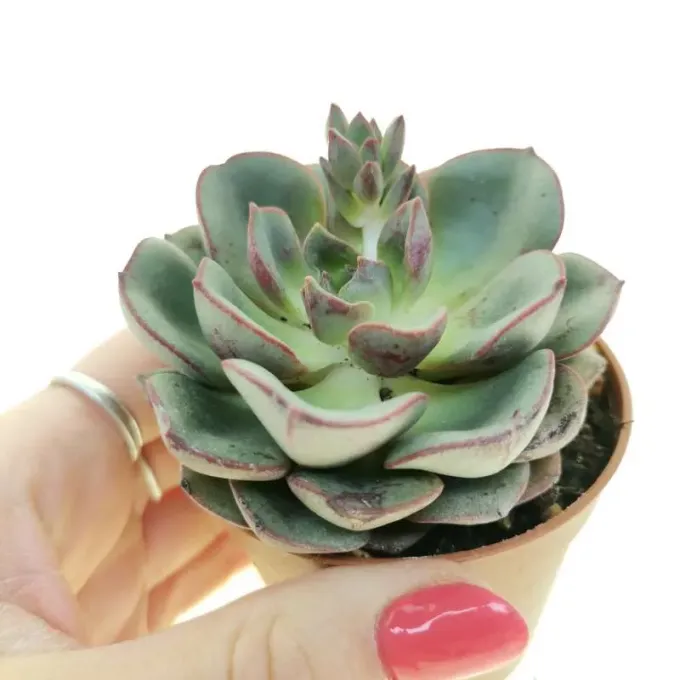
Description
Growing requirements
Echeveria moranii is a striking succulent belonging to the Crassulaceae family. The plant is valued for its compact rosette of fleshy leaves, which can develop vibrant colors when exposed to intense direct sunlight.
Naturally found in the arid rocky regions of Mexico, this species has adapted to survive with minimal moisture and high solar radiation. In cultivation, it requires bright, unfiltered light to maintain its characteristic compact growth form.
The optimal substrate for this species must be highly porous and well-draining to prevent water stagnation at the root crown. A mixture of loam, coarse sand, perlite, and fine gravel in a 1:1:1:1 ratio is considered ideal for healthy development.
During the active growing season, temperatures should ideally range between 20–25 degrees Celsius, while a cooler winter period of 10–12 degrees is necessary for the plant's health. Sudden temperature fluctuations should be avoided to prevent tissue decay.
Watering must be extremely cautious, performed only after the soil substrate has completely dried out. During the winter, irrigation is significantly reduced or stopped entirely to allow the plant to enter a dormant state, preparing it for the next season.
Main diseases and pests
The primary threat to Echeveria moranii is fungal infection, typically caused by overwatering and poor air circulation. Root rot can lead to the rapid collapse of the plant if moisture levels are not strictly monitored and managed.
Among pests, mealybugs and root mealybugs pose the most significant risk to this species. These parasites feed on the plant's sap, causing visible leaf deformation and the eventual decline of the entire rosette structure.
The plant may also fall victim to spider mites when kept in environments with excessively dry air and high temperatures. Regular inspection of the undersides of the leaves and maintaining proper ventilation are essential preventative measures.
To control pests, systemic insecticides or acaricides should be used, adhering strictly to the dosages recommended by the manufacturers. If fungal growth is detected, immediate treatment with appropriate fungicides is required to save the specimen.
Strict quarantine measures should be applied whenever introducing new plants to an existing collection. Keeping new specimens isolated for 2–3 weeks helps identify and treat any potential pests before they can affect other plants in the collection.