
Echeveria lilacina x pulidonis
Echeveria lilacina Kimnach & R. C. Moran x Echeveria pulidonis E. Walther
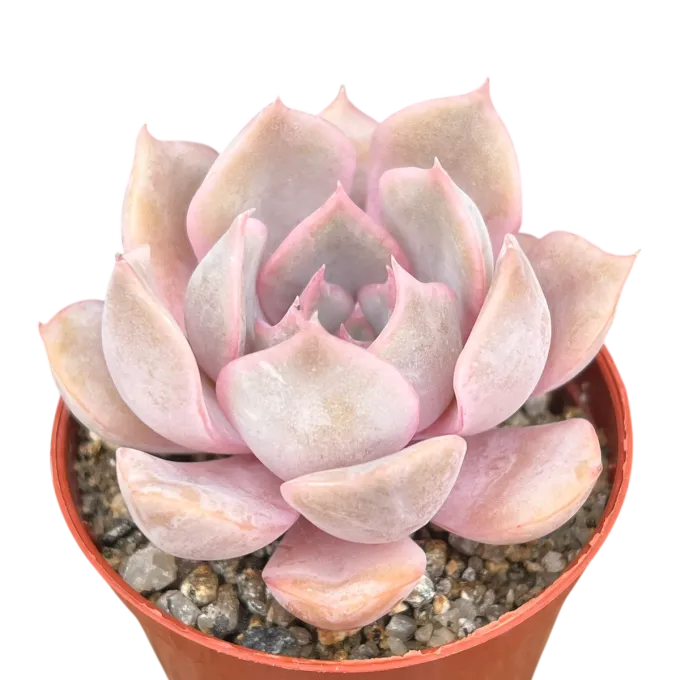
Description
Growing requirements
Echeveria lilacina x pulidonis is a hybrid succulent belonging to the Crassulaceae family, valued by collectors for its elegant, geometric rosette and distinctive leaf margins. This cultivar represents a harmonious cross that blends the chalky, pale aesthetic of one parent with the robust, lined edges of the other.
The plant requires bright, indirect light to maintain its compact form and vibrant coloration. If placed in a low-light environment, the succulent will quickly etiolate, losing its architectural appeal and becoming more susceptible to mechanical damage and stem rot.
The soil structure must be extremely well-draining, mimicking the rocky, arid natural habitats of its ancestors. A mix composed of equal parts volcanic rock, perlite, and coarse sand provides the necessary aeration for the root system to breathe and prevents the accumulation of excess moisture.
Watering should be approached with caution, adhering to the soak-and-dry method throughout the growing season. It is critical to avoid pouring water directly into the center of the rosette, as moisture trapped between the leaves can lead to rapid bacterial decay and tissue death.
During the dormant winter phase, the plant should be kept in a cool, dry environment with minimal water application. This rest period is essential for the plant to consolidate its energy, ensuring vigorous growth and potential blooming in the following spring cycle.
Main diseases and pests
Mealybugs are the most frequent threat to this hybrid, as they thrive in the tightly packed leaves of the rosette. Their presence is marked by white, cotton-like masses, and they can be managed with targeted applications of horticultural oils or systemic insecticides.
Root rot, caused by overwatering or poor drainage, remains the primary cause of mortality for this species. Signs of decline include darkening of the stem base and the shedding of lower leaves, which requires immediate repotting and removal of decayed root segments.
Fungal leaf spot diseases can emerge if the plant is kept in high humidity with insufficient ventilation. Maintaining good airflow around the plants is essential for prevention, along with the prompt removal of any dead or yellowing leaves from the soil surface.
Spider mites can occasionally infest the plants in hot, dry conditions, causing microscopic damage and discoloration of the leaf epidermis. Regular misting (with caution) or treatment with mite-specific pesticides can effectively control these populations before they impact the plant's health.
Mechanical damage to the leaf cuticle can lead to permanent scarring and increased susceptibility to secondary infections. Careful handling is required to preserve the natural bloom, which acts as a protective barrier against environmental stress and external pathogens.