
Echeveria lilacina x parva
Echeveria lilacina Kimnach & R. C. Moran x Echeveria parva A. Berger
Description
Growing requirements
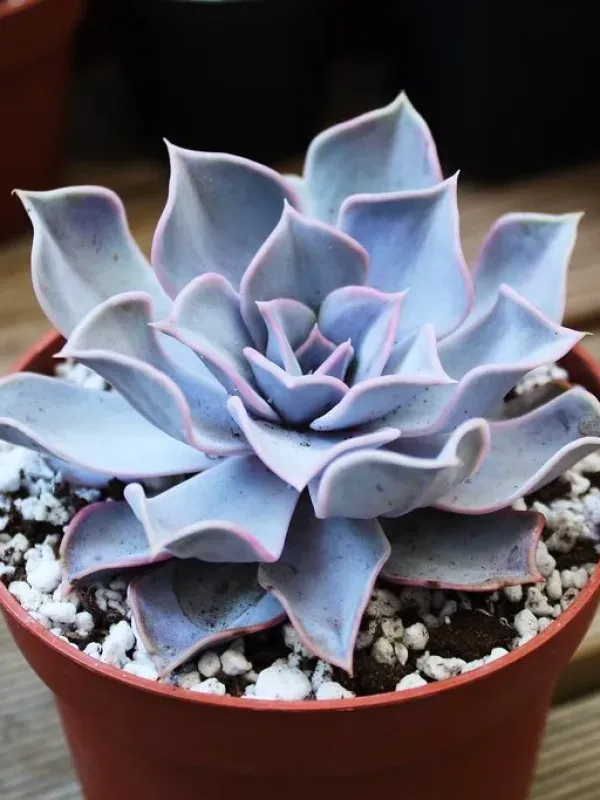
Echeveria lilacina x parva is a hybrid succulent belonging to the Crassulaceae family. It exhibits characteristics of both parent plants, featuring compact, rosette-forming foliage covered in a delicate farina (waxy bloom) that protects the leaves from intense sunlight and moisture loss.
This crop requires high levels of natural light to maintain its compact shape. In indoor environments, placing the plant in a window with morning sun is ideal to ensure that the rosettes remain tight and do not become etiolated, which often occurs in low-light conditions.
Soil requirements are strict: the substrate must be highly porous and inorganic. A blend of pumice, perlite, and coarse sand mixed with a minimal amount of well-draining potting soil is recommended to allow air circulation around the root zone.
Watering protocols should follow the soak-and-dry method. It is essential to allow the soil to dehydrate completely before applying water again, as persistent moisture is the primary cause of root degradation in this genus.
Temperature management is crucial for the health of the plant. It performs best in moderate climates but requires a cooling period during the winter months to simulate natural seasonal changes and promote the development of its ornamental flower spikes.
Main diseases and pests
The primary agricultural threats to this succulent include fungal pathogens that thrive in damp, stagnant environments. Root rot and stem rot are the most common diseases, typically triggered by improper irrigation cycles or poor drainage systems.
Mealybugs are the most frequent insect pest encountered in the cultivation of Echeveria hybrids. They are often found tucked between the leaves or near the base of the plant, where they feed on sap and weaken the overall structure of the rosette.
Spider mites can occasionally infest the plant, especially in low-humidity conditions. Their presence is marked by fine webbing and small, discolored spots on the foliage, which can quickly ruin the aesthetic value of the plant if left untreated.
For pest management, it is advised to use systemic insecticides that are labeled as safe for succulents. One must be cautious when applying sprays, as they can permanently remove the protective waxy bloom, making the plant more susceptible to sunburn.
Preventative cultural practices include ensuring adequate spacing between plants to improve airflow and consistently monitoring the base of the rosettes for early signs of decay or pest infestation, which is vital for maintaining a healthy, high-yield collection.