
Ghost Echeveria
Echeveria lilacina Kimnach & R. C. Moran
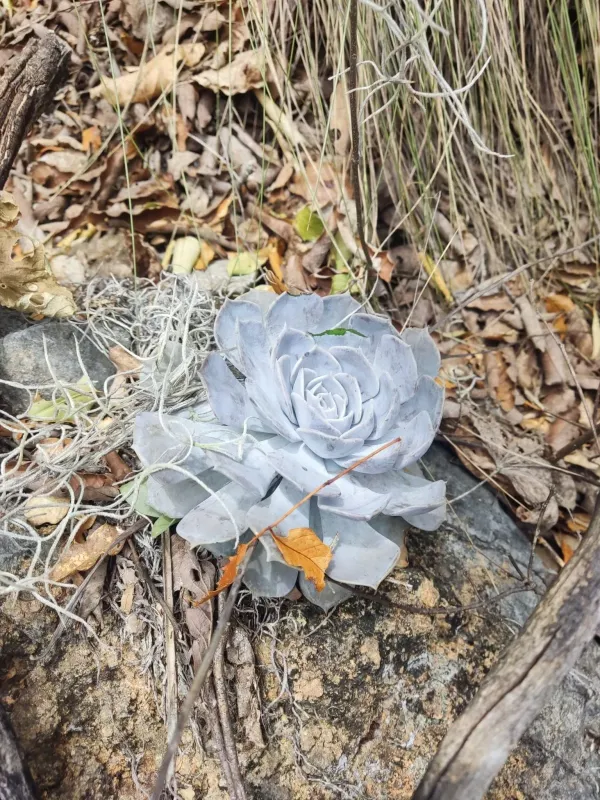
Description
Sowing dates
Propagation of Echeveria lilacina is primarily achieved through leaf cuttings, which is the most reliable method for maintaining the unique rosettes of this succulent species. The best time for propagation is during the active growth phase in spring or summer.
Carefully remove a healthy leaf from the parent plant and allow it to callous over for a few days in a dry place. This step is essential to prevent the leaf from rotting when it comes into contact with the potting medium.
Seed propagation is also possible but requires strict temperature control between 20–25 degrees Celsius. Seeds should be sown in a light, well-draining peat-sand mixture and kept under moderate humidity.
Young seedlings require bright, indirect light to develop correctly. Avoid placing them in direct scorching sun during the initial weeks to prevent tissue damage.
Repotting should be performed every two years to ensure the plant has enough space for root development and to refresh the nutrient content of the soil mix.
Growing requirements
Echeveria lilacina, a member of the Crassulaceae family, is native to the rocky regions of Mexico. It is highly adapted to arid environments and intense sunlight exposure.
The plant thrives in bright, direct sunlight, which is necessary to maintain its compact, symmetrical rosette form and its distinct lavender-grey farina (waxy coating).
The soil must be porous and provide excellent drainage. A commercial succulent or cactus mix enriched with perlite, pumice, or coarse sand is recommended to ensure rapid water drainage.
Watering should follow the soak-and-dry method: only water when the substrate is completely dry. During the winter dormancy, watering should be significantly reduced and the temperature lowered to about 10–12 degrees Celsius.
Proper air circulation is crucial to prevent fungal issues. Stagnant air combined with moisture often leads to rapid decay of the fleshy leaves and roots.
Main diseases and pests
The most significant threat to Ghost Echeveria is overwatering, which quickly leads to root rot. Signs include yellowing, translucent, or mushy leaves starting from the bottom of the rosette.
Mealybugs are the most common pests, often settling in the crevices between the leaves. Regular inspection of the plant's heart and leaf axils is essential for early detection.
Spider mites may occasionally infest the plant, especially in low-humidity environments. They cause stippling and scarring on the succulent's surface.
To maintain plant health, provide optimal spacing between pots and avoid splashing water on the leaves, as water drops can damage the sensitive farina layer.
If pests or signs of fungal infection appear, use appropriate systemic insecticides or fungicides, ensuring the product is safe for use on sensitive succulent foliage.