
Echeveria hybrids
Echeveria hybrids
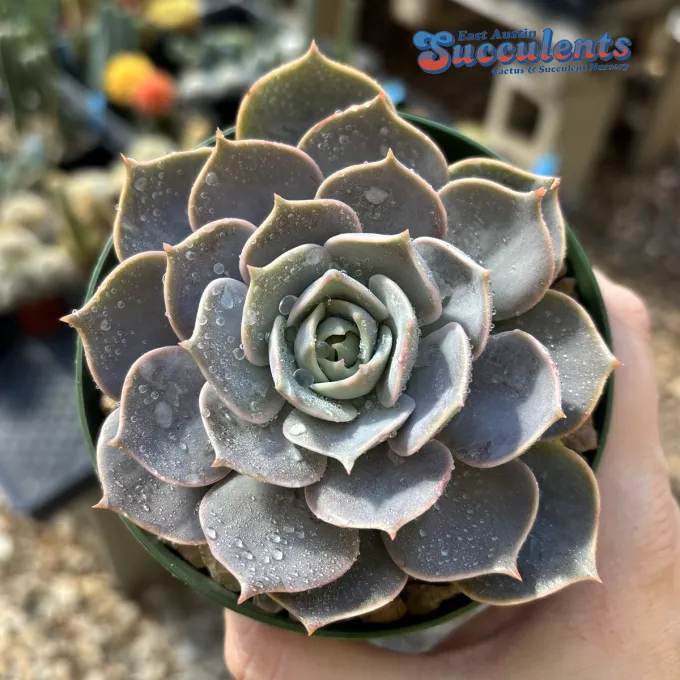
Description
Sowing dates
The propagation of hybrid Echeveria in commercial production is primarily achieved through vegetative means, using leaf cuttings or by separating the offset rosettes that develop at the base of the mother plant.
Seed propagation is utilized for breeding new hybrid varieties; however, the seeds are extremely small and require strict temperature control, typically between 20–25 degrees Celsius, to ensure successful germination.
Sowing should be performed on a light, sterile substrate composed of peat and sand, ensuring that seeds are not buried deeply but are lightly pressed against the moist surface.
The rooting phase for cuttings generally lasts between two to four weeks, provided the environment has moderate lighting and the leaf incision remains dry to prevent bacterial or fungal decay.
The most favorable season for active propagation is the spring and summer months, as increased natural light availability supports rapid metabolic processes and tissue development.
Growing requirements
Echeveria belongs to the Crassulaceae family and consists of low-growing, rosette-forming succulents native to the mountainous and desert regions of Mexico and Central America.
To maintain optimal growth, these plants require intense light levels, including direct sun or bright filtered light for 6–8 hours daily, to prevent etiolation and maintain their compact shape.
The temperature optimum for vegetative growth ranges from 20–28 degrees Celsius during the day, with slightly cooler night temperatures that help enhance the coloration of the foliage.
The growing medium must provide excellent aeration and drainage; a standard mixture includes specialized succulent soil amendments such as coarse sand, pumice, or perlite to prevent root asphyxiation.
Irrigation must be strictly managed, allowing the substrate to dry out completely between watering cycles, as chronic moisture excess is the primary cause of root system failure.
Main diseases and pests
The most significant threat to the culture under improper moisture management is root and stem rot, caused by fungal pathogens that thrive in consistently damp or waterlogged conditions.
Among common pests, the mealybug poses a severe risk; these insects congregate in the leaf axils, draining cellular fluids and significantly weakening the plant's structural integrity.
Poor ventilation in greenhouse environments may lead to infestations of spider mites, which result in leaf deformation and the appearance of characteristic chlorotic spotting on the foliage.
Disease prevention relies on strict moisture control, maintaining low ambient humidity, and implementing routine visual inspections of the rosette structures to detect early symptoms.
- Application of systemic insecticides for mealybug control.
- Utilization of specialized fungicides upon the onset of fungal symptoms.
- Implementation of forced ventilation systems in enclosed greenhouse spaces.