
Echeveria humilis
Echeveria humilis Rose
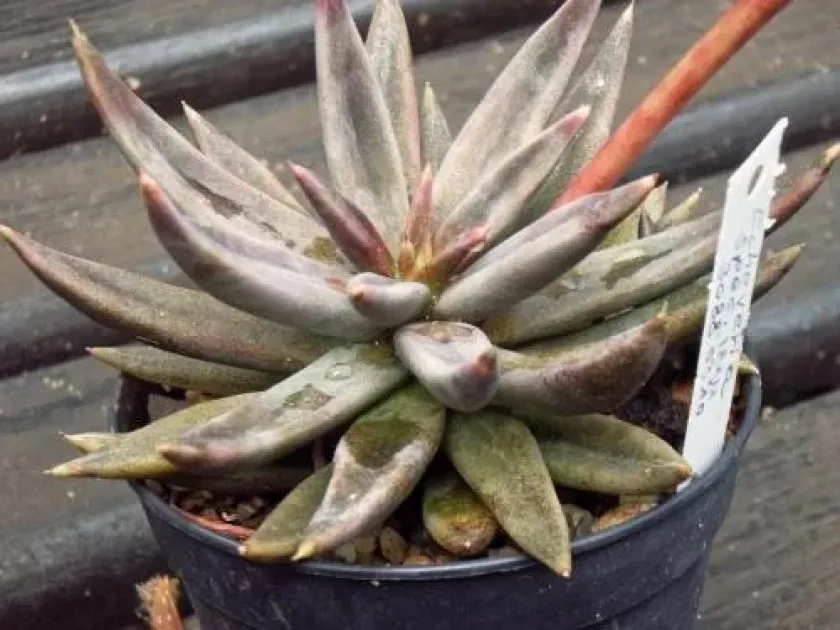
Description
Growing requirements
Echeveria humilis Rose is a perennial succulent belonging to the Crassulaceae family. Native to the mountainous regions of Mexico, this species is highly adapted to rocky, well-draining soils and high-altitude sunlight conditions.
The plant is defined by its compact rosette shape, consisting of fleshy, succulent leaves. This specific morphology allows the plant to store water efficiently, making it highly drought-tolerant in its natural habitat.
Cultivation requires abundant bright light to maintain the plant's structural integrity. Without sufficient light, the plant becomes etiolated, which means the stem stretches out and the leaves become sparse, losing their ornamental appeal.
The soil must be inorganic-rich and extremely porous. A standard mix usually includes cactus potting soil combined with pumice or coarse grit to ensure rapid drainage and prevent the roots from sitting in moist conditions.
Watering should be performed using the soak-and-dry method. It is critical to ensure that the substrate is completely dry before adding more water, especially during the winter dormancy period when growth slows down significantly.
Main diseases and pests
Overwatering is the primary cause of plant death in Echeveria cultivation. Excess moisture causes rot in the root system and stem base, often becoming irreversible once the tissues begin to decay.
Mealybugs are the most persistent pests affecting Echeveria. These insects hide in the tight spaces between leaves and at the base of the rosette, where they feed on plant sap and secrete a sticky substance that invites further disease.
Fungal infections can emerge if air circulation is poor. Powdery mildew or black spots may appear on the leaves, requiring immediate removal of affected areas and the application of appropriate antifungal treatments.
Root mealybugs can cause stunted growth without visible surface signs. If the plant looks sickly despite proper watering, inspecting the root zone for white, cotton-like masses is essential for diagnosis.
Good agricultural practice dictates that new plants should be quarantined before being placed with an existing collection. Regular monitoring and maintaining a clean growing environment are the best defenses against widespread infestation.