
Echeveria harmsii
Echeveria harmsii
Description
Growing requirements
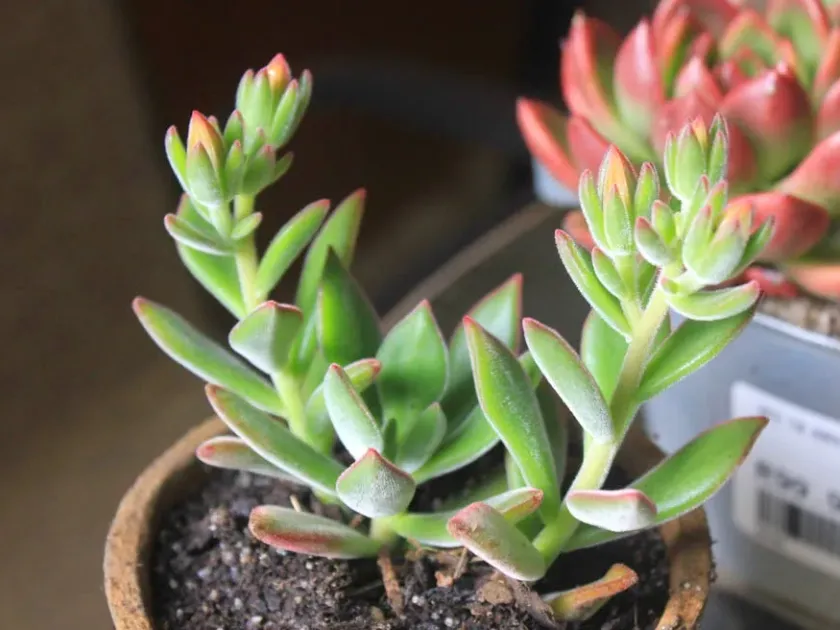
Echeveria harmsii, belonging to the Crassulaceae family, is a distinct succulent native to the mountain regions of Mexico. This plant is highly prized for its fuzzy, red-tipped foliage and striking, bell-shaped orange flowers that appear during the flowering season.
Optimal growth requires bright, indirect sunlight or direct morning sun to maintain the plant's compact, rosette form. Insufficient light levels will cause the stems to etiolate, resulting in a leggy and unattractive appearance that is difficult to correct later.
Environmental conditions should mimic the arid climate of its native habitat. A temperature range between 20°C and 25°C is ideal during the growing season, while a cooler dormant period in winter, ideally between 10°C and 12°C, is essential for healthy flower development.
The soil substrate must be exceptionally well-draining, such as a specialized cactus and succulent mix amended with perlite or coarse sand. This ensures that the root system remains aerated and protected from prolonged moisture exposure.
Watering practices must be disciplined: apply water only when the substrate has completely dried out. It is crucial to prevent water from accumulating in the leaf rosette to avoid stem rot, which can prove fatal to the plant if left unchecked.
Main diseases and pests
The primary threats to Echeveria harmsii are fungal diseases driven by poor air circulation and excessive moisture in the root zone. Root rot and stem rot are the most common issues that necessitate immediate intervention and potential propagation of healthy cuttings.
Mealybugs are the most persistent pests affecting this species, often finding shelter in the fine hairs on the leaves. Manual removal combined with systemic insecticides is necessary to manage outbreaks and prevent permanent damage to the foliage.
Spider mites may infest the plant during hot and dry spells. Their presence is usually indicated by fine webbing and discoloration of the leaf surfaces, which requires an adjustment in humidity or specific acaricide treatments.
Poor horticultural practices, particularly over-fertilization with high-nitrogen products, can weaken the cell walls, making the plant more susceptible to opportunistic infections. Balanced, low-nitrogen fertilizers are recommended during the active growing phase only.
Maintaining a sterile environment during propagation and using only clean, sharp tools for pruning are essential preventative measures. Keeping the plant in a quarantine zone when new additions are made to a collection minimizes the risk of introducing pests or pathogens.