
Echeveria globulosa
Echeveria globulosa
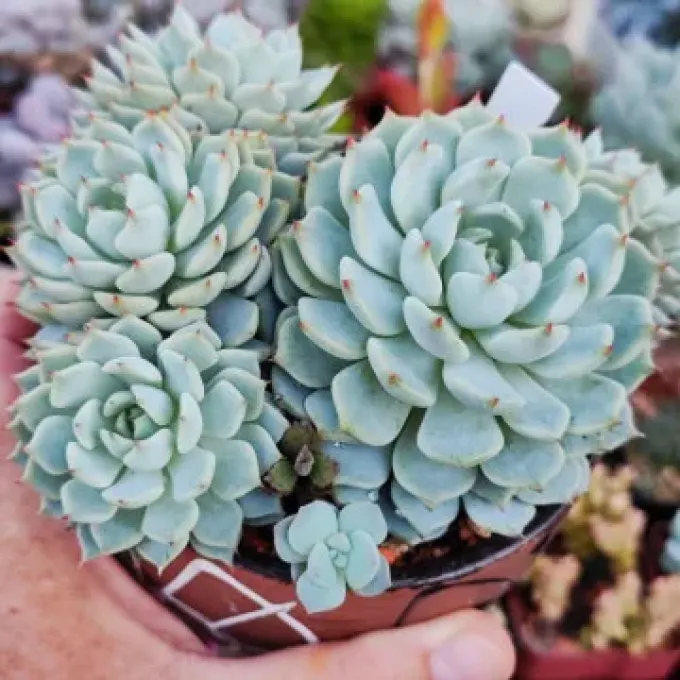
Description
Growing requirements
Echeveria globulosa is a distinctive member of the Crassulaceae family, native to the arid mountainous regions of Mexico. This succulent species is highly adapted to rocky environments, characterized by its compact, spherical rosette growth habit that allows it to store water efficiently during prolonged droughts.
The plant features thick, fleshy leaves that often possess a glaucous coating. This natural wax layer acts as a vital protection against harsh UV radiation and helps prevent moisture loss, enabling the plant to maintain its structural integrity under intense thermal stress in its native habitat.
To ensure optimal growth and health, Echeveria globulosa requires plenty of bright, indirect sunlight. While it can handle some direct morning sun, high-intensity afternoon exposure should be filtered to avoid scorching the leaf surfaces, which can leave permanent scarring and reduce the plant's aesthetic value.
A well-draining soil medium is the most critical factor for success. Standard potting soil is insufficient; growers should utilize a specialized succulent mix consisting of volcanic grit, perlite, and coarse sand. This composition allows for rapid water drainage, preventing the roots from suffocating in wet conditions.
Temperature management is key to mirroring the plant's natural life cycle. It thrives in moderate temperatures between 20°C and 25°C during the growing season. A cooler dormant period during winter, with temperatures dropping to around 10°C, is essential for promoting future blooming and plant longevity.
Main diseases and pests
Root rot is the most common ailment affecting this species, almost always triggered by overwatering or poor soil drainage. When the soil remains damp for too long, oxygen circulation is inhibited, leading to the rapid decay of the root system and the subsequent collapse of the entire rosette structure.
Mealybugs are the primary pests that target Echeveria globulosa, frequently congregating in the tight spaces between leaves. These sap-sucking insects drain the plant of energy and leave behind a sticky honeydew substance, which can quickly foster the growth of black sooty mold on the foliage.
Spider mites are another major threat, especially in environments with low humidity. They thrive in dry air, spinning almost invisible webs around the base of the plant. Their feeding habits cause the foliage to become discolored and stunted, often leading to irreversible damage if left untreated.
Effective pest control requires a combination of mechanical removal and targeted treatment. For minor infestations, a cotton swab dipped in isopropyl alcohol is highly effective at killing pests on contact without harming the succulent's delicate leaf coating or the plant's overall health.
Preventative maintenance includes keeping the foliage dry, especially when watering. Water should be applied directly to the soil to avoid trapping moisture in the center of the rosette, as prolonged moisture retention in the crown is a primary pathway for fungal infections and rapid tissue death.