
Echeveria gigantea x Echeveria secunda
Echeveria gigantea x Echeveria secunda
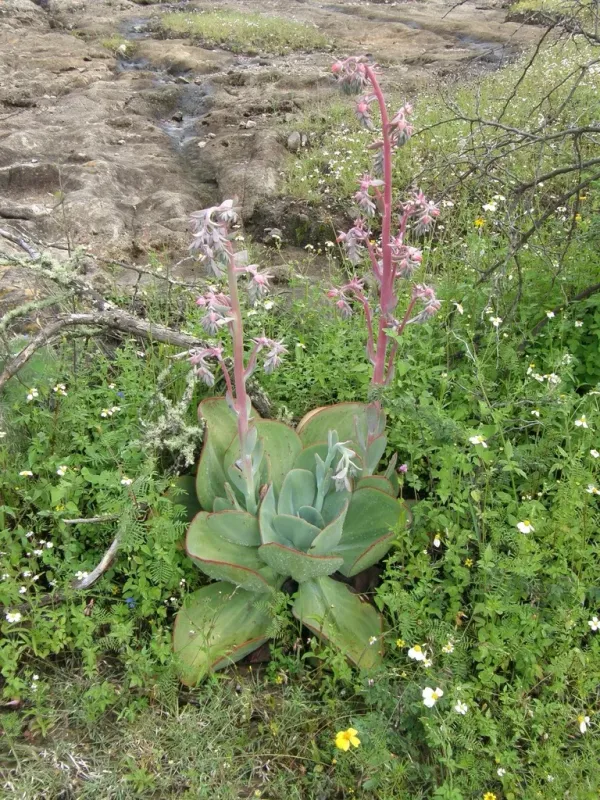
Description
Growing requirements
This hybrid is a result of cross-breeding species within the Crassulaceae family. The plant features a tight rosette of thick, fleshy leaves that store moisture, representing a key evolutionary adaptation to arid environments.
For optimal development, this echeveria requires bright, indirect sunlight. If the light intensity is insufficient, the rosette will lose its shape, become leggy, and the leaf coloration will fade, making the plant more vulnerable to disease.
The culture has strict requirements regarding the growing medium: the soil must be loose, aerated, and have a neutral to slightly acidic pH. A drainage layer at the bottom of the container is mandatory to prevent root saturation.
Ideal temperatures during the active growing season range from +20 to +25 degrees Celsius. During the winter months, the plant benefits from a cool dormant period with temperatures between +10 and +12 degrees Celsius.
Watering should be performed strictly at the base of the plant, only after the substrate has completely dried out. Water logging or letting water accumulate in the center of the rosette will rapidly lead to rot and plant loss.
Main diseases and pests
The primary threat to this crop is fungal diseases caused by over-watering. Various types of rot, including root and stem rot, develop rapidly if irrigation guidelines are not strictly observed.
Among pests, the mealybug is the most significant threat, often hiding deep within the leaf axils. The use of systemic insecticides combined with regular physical inspection is recommended for management.
Spider mite infestations are also possible if indoor humidity levels remain consistently low. Maintaining moderate air humidity and ensuring proper air circulation acts as an effective preventative measure.
If the plant develops fusarium or phytophthora, immediate soil replacement and fungicide application are necessary. It is critical to prune away all affected tissue to prevent the infection from spreading.
Light deprivation is also a major threat, as plants grown in poor conditions lose their natural defense mechanisms and become susceptible to secondary bacterial pathogens.