
Echeveria gibbiflora
Echeveria gibbiflora DC.
Description
Growing requirements
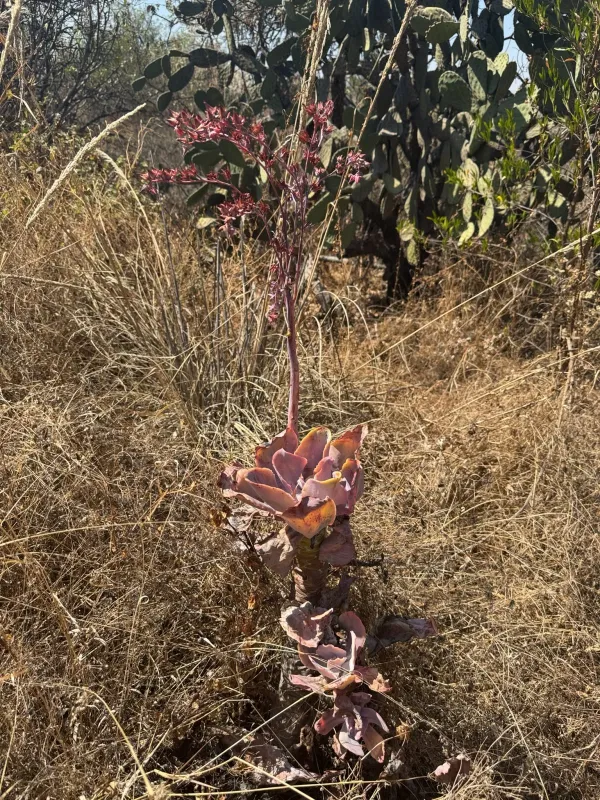
Echeveria gibbiflora is a perennial succulent species native to Mexico, belonging to the Crassulaceae family. It is widely recognized for its large, fleshy rosettes that serve as a striking ornamental feature in controlled agricultural and horticultural settings.
The plant grows naturally in mountainous, rocky habitats, which has influenced its high tolerance for nutrient-poor substrates and direct sunlight. Under cultivation, it develops a thick, woody stem that supports heavy, often greyish-purple tinted leaves.
Successful management requires a well-draining substrate to prevent moisture accumulation around the base. Using mixtures high in grit, perlite, or volcanic rock is essential to mimic its natural environment and ensure the health of its root system.
Environmental requirements include bright, indirect light or full sun to maintain the compact rosette structure. Inadequate lighting often leads to etiolation, significantly reducing the plant's aesthetic value and its structural integrity.
Watering protocols must follow a dry-out cycle, where the soil is allowed to dry completely before the next application of moisture. During the winter dormancy phase, irrigation should be significantly reduced to support the plant's natural metabolic slowdown.
Main diseases and pests
The most significant pathological threats to Echeveria gibbiflora are fungal infections driven by high humidity and poor ventilation. Stem rot and leaf spot diseases can spread rapidly if the environment is too humid or if water is trapped within the rosettes.
Common pests include mealybugs and spider mites, which can cause significant damage by feeding on the sap of the leaves. Integrated pest management, focusing on early detection and targeted treatments, is crucial for preserving the health of ornamental nursery stocks.