
Echeveria elegans x lilacina
Echeveria elegans Rose x Echeveria lilacina Kimnach & R. C. Moran
Description
Growing requirements
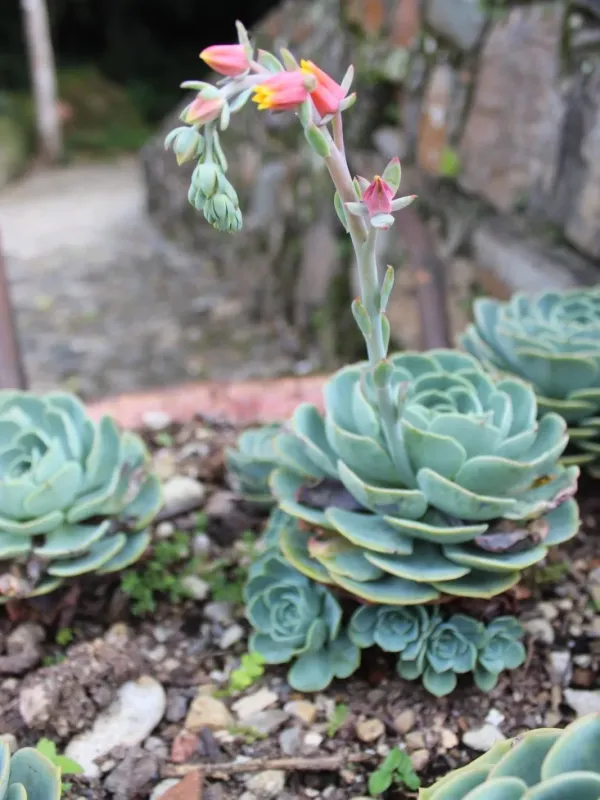
Echeveria elegans x lilacina is a hybrid belonging to the Crassulaceae family. This cultivar is highly valued for its aesthetic appeal, specifically its succulent, pale blue-toned rosettes covered in a protective farina.
The plant requires high light intensity to maintain its compact rosette structure. In indoor conditions, it should be placed in the brightest window available or under professional LED grow lights.
The growing medium must be highly porous and well-draining. A mix consisting of standard cactus soil amended with coarse sand, pumice, or perlite is essential to ensure that roots do not remain damp for too long.
Thermal requirements for this succulent are moderate. It thrives in temperatures between 18°C and 25°C. During the winter dormancy period, temperatures should ideally drop to about 10°C to encourage healthy growth in spring.
Watering should be performed only when the soil has completely dried out. The 'soak and dry' method is recommended to simulate natural rainfall patterns, preventing root rot and physiological stress.
Main diseases and pests
Mealybugs are the primary pests that affect Echeveria hybrids. They tend to hide in the tight spaces between leaves and at the base of the rosette, requiring targeted insecticidal soap treatments.
Fungal rot, specifically Fusarium or Phytophthora, can destroy the plant very quickly if there is standing water in the rosette. Avoiding overhead watering is a critical agricultural practice.
Spider mites can become an issue in environments with low air circulation and high heat. Infestation signs include fine webbing and discolored, stippled patches on the leaves.
Root rot is often a consequence of improper soil structure. If the plant loses its grip on the soil, it indicates severe root damage, requiring immediate repotting and removal of decayed matter.
Aphids might feed on the succulent's inflorescence during the blooming season. These can be managed through manual removal or systemic insecticides if the infestation is severe.