
Echeveria elegans hybrid
Echeveria elegans Rose x Echeveria gibbiflora DC.
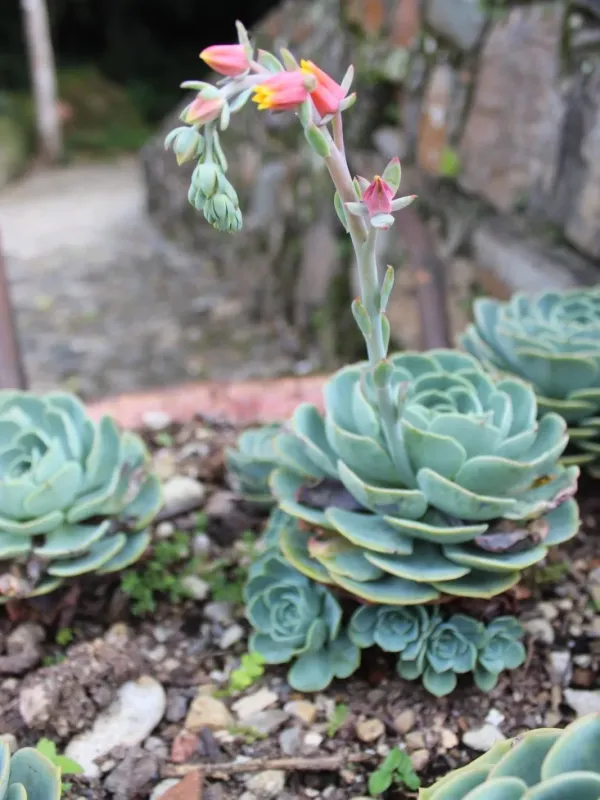
Description
Sowing dates
Propagation of the Echeveria elegans hybrid is most effectively achieved through vegetative methods during the active growth season. Leaf cuttings or offset rosettes are carefully removed from the parent plant and allowed to callus over for several days before planting.
Seed propagation is more complex and requires a controlled greenhouse environment with temperatures maintained between 20 and 25 degrees Celsius. Seeds should be sown on a fine, porous substrate and kept lightly misted without burying them, as light is necessary for germination.
The germination period usually spans from two to four weeks, during which consistent humidity is vital. Once the seedlings emerge, they must be gradually acclimated to lower humidity levels to prevent rot and promote healthy root development.
Successful vegetative propagation requires using sterile, well-draining soil to prevent fungal infections during the rooting process. Young plants should be kept away from direct, harsh sunlight until they establish a robust root system.
Effective horticultural practices include ensuring adequate ventilation for cuttings. By maintaining a clean environment and utilizing proper substrate mixtures, growers can ensure a high survival rate for newly started Echeveria specimens.
Growing requirements
This hybrid, a member of the Crassulaceae family, thrives in conditions that mimic its native arid habitats, requiring significant sunlight to maintain its signature compact rosette shape. Bright, indirect light or full sun is necessary for optimal growth.
The substrate must be highly porous and inorganic-leaning to allow for rapid drainage. A mix of pumice, perlite, and coarse sand with a small amount of peat is ideal for providing the necessary aeration for the sensitive root system.
Temperature management is critical; during the summer, the plant prefers temperatures between 20 and 28 degrees Celsius, whereas winter dormancy requires cooler temperatures near 10 to 15 degrees. Cold and humidity combined are lethal to the plant.
Watering should be performed only when the soil has completely dried out, following the soak-and-dry method. Care must be taken to ensure no water remains in the rosette center, which could lead to crown rot and permanent damage.
Echeveria hybrids do not require high humidity and often perform better in dry, well-ventilated settings. Air circulation is the most effective way to prevent the buildup of moisture that leads to fungal pathogens and pests.
Yield
In commercial plant production, the yield is defined by the number of high-quality, symmetrical rosettes produced per square meter. Controlled lighting and automated watering systems allow for a standardized, efficient production cycle in greenhouse environments.
Optimizing the production cycle involves using light supplementation to achieve the desired compact form in a shorter timeframe. This reduces energy costs and improves the aesthetic value of the final product for the retail market.
The commercial application of this hybrid is primarily for the ornamental plant trade, including use in miniature gardens and mixed succulent arrangements. Its resilience and striking appearance make it a staple in the indoor plant industry.
Feeding should be conducted with specialized low-nitrogen, high-potassium fertilizers to promote leaf density and waxy cuticle development. Over-fertilization results in succulent, weak growth that is prone to physical damage and disease.
Quality control standards focus on the absence of pest damage, proper coloration, and the overall firmness of the rosette. A market-ready plant must demonstrate excellent health, symmetrical development, and clear adherence to hybrid characteristics.
Main diseases and pests
Mealybugs are the most common pest affecting Echeveria, congregating in the tight spaces between leaves and at the base of the rosette. Systemic insecticides are the preferred method of control, along with physical removal where possible.
Fungal issues, such as root rot caused by overwatering, are the most significant threat to the plant's health. The rapid onset of black, mushy tissue at the base of the plant indicates an emergency situation requiring immediate repotting.
Spider mites can be problematic in dry, stagnant air conditions, resulting in stippling and disfigurement of the leaves. Maintaining proper air circulation and monitoring the plants regularly for signs of web-like structures is crucial for prevention.
Stem rot and leaf drop are frequently associated with poor drainage or excessive humidity in the greenhouse environment. Proactive monitoring of the growing medium moisture levels is the most effective way to prevent these physiological disorders.
- Perform routine inspections for white cottony masses (mealybugs).
- Ensure all potting media is sterilized before use to avoid soil-borne pathogens.
- Quarantine all new plants to prevent the introduction of pests to the greenhouse.