
Echeveria colorata
Echeveria colorata E. Walther
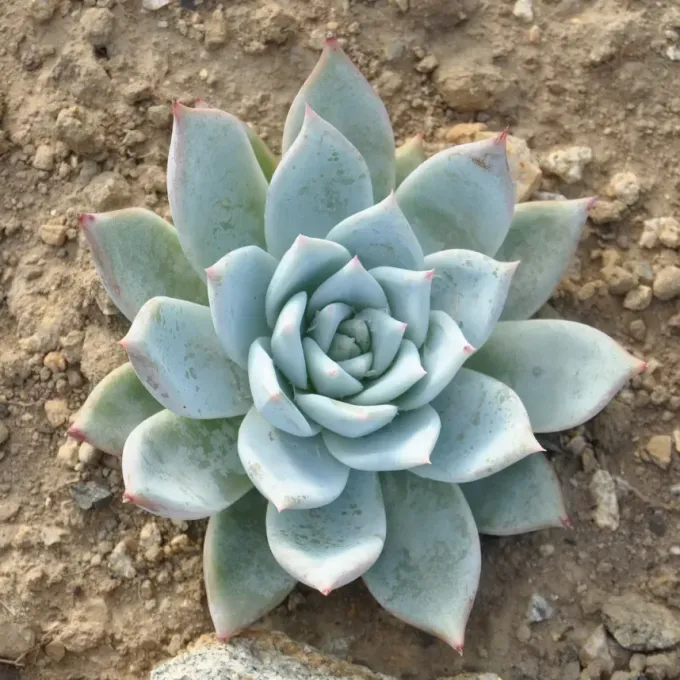
Description
Sowing dates
Echeveria colorata is propagated primarily through seeds or leaf cuttings. Seed sowing is ideally performed in spring, requiring a consistent temperature of approximately +20…+22°C to ensure successful germination.
The substrate for sowing must be sterile, well-draining, and composed of fine sand mixed with peat moss. Surface moisture must be carefully maintained to avoid damping-off, a common fungal issue for succulent seedlings.
For vegetative propagation, healthy leaves are carefully removed from the mother plant and left in a shaded area for several days to develop a callous. This prevents the leaf from rotting upon contact with the soil.
Once the callous is formed, the leaf is placed on the surface of the growing medium. The cutting should not be buried, as this encourages decay rather than root initiation in the sensitive tissues.
Newly formed plantlets should be kept in bright, indirect light. Only when they have developed a robust root system and a visible rosette should they be repotted into individual, small containers with adequate drainage.
Growing requirements
Echeveria colorata, a member of the Crassulaceae family, originates from the arid regions of Mexico. It is a heliophilous species that requires intense, direct sunlight to maintain its compact, distinct rosette structure.
The plant demands a highly porous soil mix. A suitable agricultural medium consists of potting soil, coarse grit, and perlite in a 1:1:1 ratio, ensuring that water passes through the container rapidly.
Active growth occurs during the warm season with temperatures between +20°C and +28°C. During the dormant winter phase, temperatures should be lowered to +10…+15°C to mimic the plant's natural environmental cycles.
Irrigation must be strictly managed, following the soak-and-dry method. The soil must dry out completely between waterings to prevent root death; in winter, water should be applied sparingly to maintain plant turgor.
Good ventilation is essential to avoid the buildup of humidity around the leaves. Water should never be allowed to accumulate in the central rosette, as this promotes bacterial infections and crown rot.
Main diseases and pests
Root rot and crown rot are the most significant threats to Echeveria colorata, typically caused by overwatering or poorly drained substrates. These pathogens thrive in stagnant moisture and low light.
Mealybugs are the most persistent pests for this variety. They hide in the compact junctions between leaves, feeding on plant sap. Early detection and manual removal are critical to prevent widespread infestation.
Spider mites can also become a problem in hot, dry environments. They cause stippling on the leaves, leading to chlorosis and potential plant decline if not addressed with appropriate systemic acaricides.
Preventative measures include regular inspection of the leaf axils and maintaining proper airflow within the nursery. Fungicide usage should be reserved for confirmed cases of fungal pathogen presence.
- Root and crown rot
- Mealybugs
- Spider mites
- Root mealybugs
Harvesting
In a commercial agricultural setting, Echeveria colorata is grown for the ornamental plant market. Harvesting is not a seasonal event but rather a selection process of mature, healthy rosettes ready for retail.
Production cycles generally span 12 to 18 months, depending on the propagation method. Quality control involves monitoring leaf color intensity and symmetry, which are the primary aesthetic markers for this species.
Sanitation of the crop involves the removal of dead lower leaves and spent flower stalks. This process ensures the plant remains clean and reduces the risk of pests seeking shelter in decaying organic material.
When selecting plants for further propagation, agronomists look for stress-free specimens that show no signs of etiolation. These "mother" plants are kept in controlled conditions to optimize cutting production.
While seed harvesting is possible, it is commercially secondary to vegetative reproduction. Seed pods must be harvested when they show signs of drying to prevent the premature loss of the tiny seeds.