
Echeveria agavoides x pulidonis
Echeveria agavoides x Echeveria pulidonis
Description
Growing requirements
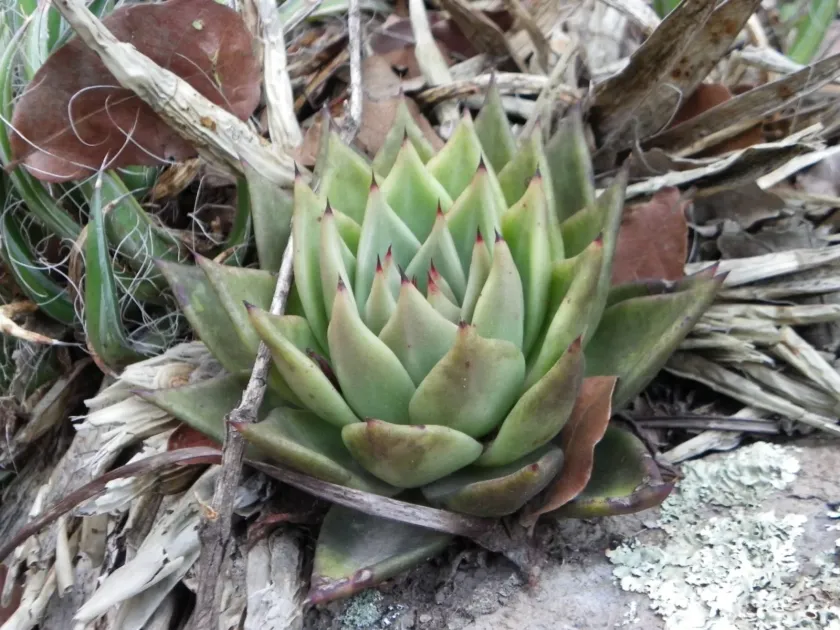
Echeveria agavoides x pulidonis is a distinctive hybrid belonging to the Crassulaceae family. It is prized for its architectural rosette shape and firm leaves, which often display attractive red margins under optimal conditions.
The plant thrives in bright, indirect light. While it requires plenty of sunshine to maintain its compact form, direct intense sunlight during the hottest part of the day should be avoided to prevent leaf scorch.
A well-draining, porous potting mix is essential for this species. A blend of coarse sand, perlite, and potting soil allows for proper aeration and prevents the roots from remaining wet for too long.
Watering should be approached with caution using the soak-and-dry method. Ensure that all water drains out of the container to prevent crown rot, especially in the winter months when the plant enters dormancy.
Ideal temperatures range from 20°C to 25°C during the growing season. A cooler, drier period during winter is beneficial to encourage blooming and maintain the overall vitality of the plant.
Main diseases and pests
Root rot is the most significant threat to this hybrid, usually caused by overwatering or using a heavy, moisture-retentive substrate.
Mealybugs are common pests that tend to hide in the tight spaces between leaves. Regular inspection of the rosette is necessary for early detection and control.
Fungal infections can develop if the environment is humid and lacks sufficient air circulation, leading to discolored or mushy leaves.
Using sterile soil and clean containers helps minimize the risk of soil-borne diseases that could compromise the health of the plant.
To combat pests, apply suitable systemic treatments and ensure the plant is kept in a well-ventilated area to reduce susceptibility to infections.