
Echeveria agavoides hybrid
Echeveria agavoides x Echeveria multicaulis
Description
Growing requirements
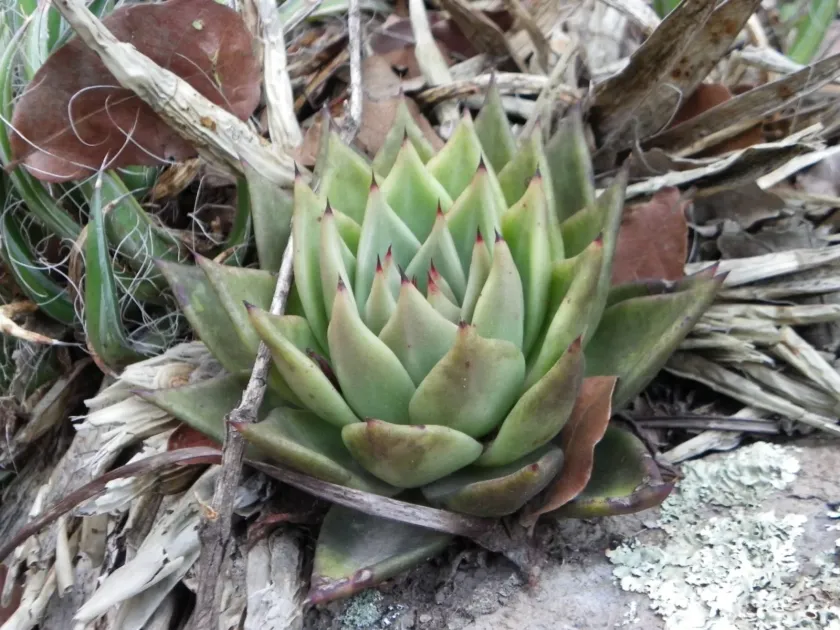
Echeveria agavoides hybrid (Echeveria agavoides x Echeveria multicaulis) is a beautiful member of the Crassulaceae family. It is a slow-growing succulent that forms symmetrical rosettes of thick, waxy, and pointed leaves.
The plant thrives in bright, indirect sunlight. Exposure to direct intense sun, especially in summer afternoons, can cause scorching on the succulent leaves, so filtered light is preferred for optimal aesthetics.
The growing medium must be highly porous and well-draining. A typical cactus or succulent potting mix containing coarse sand, pumice, and perlite is essential to prevent moisture retention around the roots.
Temperature requirements include warm, dry conditions during the growing season (spring to autumn) and cooler temperatures in winter to induce a period of dormancy, which supports future blooming.
Watering should be performed using the soak-and-dry method. Ensure that the soil completely dries out between watering intervals, and always avoid splashing water into the crown of the plant.
Main diseases and pests
The most significant risks to Echeveria agavoides hybrid health involve improper cultivation techniques, particularly excessive watering leading to root system failure.
Fungal infections are common under conditions of high humidity combined with poor airflow, leading to crown rot which is often fatal if not caught in time.
Pests such as mealybugs and spider mites are frequent invaders that target the tender growth points and the underside of the leaves.
Effective pest management involves isolating the affected plants and applying isopropyl alcohol or specialized organic horticultural soaps to eliminate infestations.
Maintaining a clean growing area and ensuring adequate ventilation are the best preventative measures against most common succulent diseases and insect attacks.