
Echeveria agavoides x coccinea
Echeveria agavoides x Echeveria coccinea
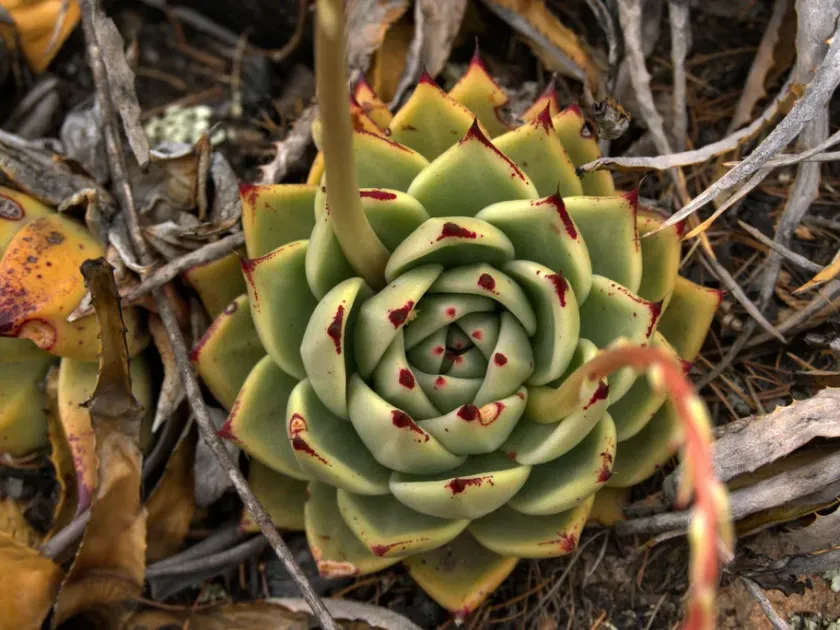
Description
Growing requirements
Echeveria agavoides x coccinea is a distinct succulent hybrid belonging to the Crassulaceae family. It is prized in ornamental horticulture for its architectural rosette shape and resilient succulent leaves that display genetic traits from its diverse parentage.
The culture originates from the arid and semi-arid highlands of Mexico. These regions are characterized by well-drained volcanic soils and a climate that balances intense sunlight with cool nights, which are essential for maintaining the plant's structural integrity.
Successful cultivation requires a high-intensity light environment. Without sufficient photons, the rosette will lose its compact form and vibrant coloration, leading to poor plant physiology and weakened physical structure.
Regarding soil media, the plant demands an inorganic-dominant substrate. Incorporating mineral components like pumice, volcanic rock, or coarse perlite ensures rapid moisture drainage, which prevents the suffocation of the delicate root system.
Temperature management should follow seasonal patterns, keeping the plant active during warmer months and reducing irrigation during winter dormancy to mimic natural environmental conditions.
Main diseases and pests
The most significant threat to this culture is the occurrence of fungal pathogens, particularly those causing crown and root rot due to improper water management and poor ventilation.
Mealybugs represent the primary pest challenge. These insects thrive in the tight crevices of the rosette leaves, where they are difficult to detect during the early stages of infestation, leading to significant nutrient loss.
In humid or stagnant greenhouse conditions, powdery mildew can occasionally manifest, affecting the aesthetic quality of the foliage and requiring immediate fungal treatment.
Integrated pest management strategies should focus on maintaining hygiene, ensuring air movement, and using systemic insecticides that are safe for succulent tissues when infestations occur.
Regular monitoring of the lower leaves is crucial, as they are the first indicators of systemic health issues, including root rot or pest colonization, allowing for timely intervention.