
Echeveria agavoides x tolimanensis
Echeveria agavoides Lem. x Echeveria tolimanensis Matuda
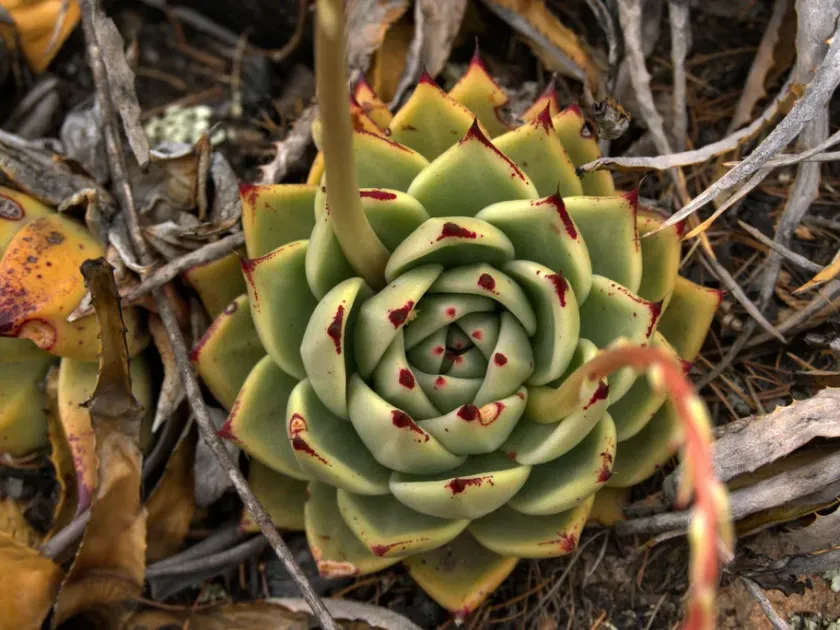
Description
Growing requirements
Echeveria agavoides x tolimanensis is a unique hybrid member of the Crassulaceae family. It is prized for its structural geometry, combining the stiff, architectural leaves of E. agavoides with the distinct aesthetic traits inherited from E. tolimanensis.
Originating from the arid regions of Mexico, this cultivar is perfectly adapted to desert environments. It is extensively cultivated as an ornamental plant in indoor collections, succulent gardens, and controlled nursery environments.
Cultivation requires a highly porous, well-draining mineral substrate. A mixture consisting of coarse pumice, expanded clay, and specialized cactus potting soil provides the aeration necessary to prevent root suffocation.
Light intensity is the most critical factor for maintaining the plant's shape. It requires bright, indirect to direct sunlight for at least 6–8 hours daily; otherwise, the plant will etiolate, losing its compact, rosette-like form.
Temperature management should follow seasonal cycles. During the active growth season, temperatures between 20°C and 25°C are optimal, while a cool dormancy period around 10°C is beneficial to prevent winter-induced stretching.
Main diseases and pests
The primary threat to this cultivar is excessive irrigation. Soil moisture retention creates an anaerobic environment, inviting pathogens like Pythium and Rhizoctonia, which cause rapid root and stem decay.
Mealybugs represent the most persistent pest threat for this species. They typically nest between the tightly packed leaves, making manual control difficult; systemic insecticides or insecticidal soaps are recommended for effective management.
Spider mites can infest the plant, particularly in low-humidity environments. These microscopic pests leave stippling patterns on the epidermis and can weaken the plant, causing it to become susceptible to opportunistic fungal infections.
Poor ventilation can lead to the formation of mold on accumulated organic debris at the base of the rosette. Regular cleaning of dead leaves is a standard horticultural practice to prevent pest colonization and fungal outbreaks.
It is important to avoid spraying water directly into the center of the rosette, as this can cause crown rot. Watering should be conducted carefully around the base of the plant to keep the leaves dry and healthy.