
Echeveria agavoides x purpusiorum
Echeveria agavoides Lem. x Echeveria purpusiorum A. Berger
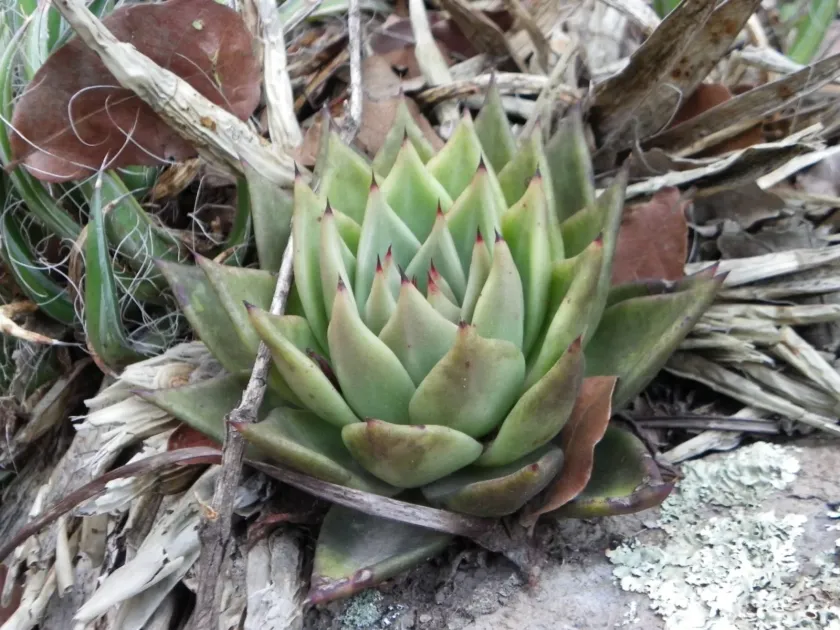
Description
Growing requirements
Echeveria agavoides x purpusiorum is a stunning hybrid belonging to the Crassulaceae family. It is highly valued in the nursery trade for its thick, succulent leaves and the intricate reddish-brown variegation inherited from its parent lines.
Native to the arid regions of Mexico, this cultivar is exceptionally well-adapted to high light and low humidity environments. Its physiological structure allows it to thrive in nutrient-poor, rocky substrates that ensure rapid water drainage.
The primary agricultural requirement for this plant is exposure to direct sunlight for several hours a day. Without sufficient light intensity, the rosettes lose their compact shape, becoming etiolated and vulnerable to physiological stress.
Soil management must prioritize aeration. A mixture consisting of pumice, perlite, and coarse sand in a 1:1 ratio with peat is considered ideal for preventing root suffocation and ensuring rapid drying cycles.
Temperature management should follow seasonal variations. While it can withstand moderate heat, protection from prolonged frost is essential. During the winter dormancy period, temperatures should remain cool to prevent premature growth spurts.
Main diseases and pests
Root rot remains the most significant threat to the health of this succulent. It is primarily caused by overwatering or the use of heavy, moisture-retentive soils that do not allow the root system to breathe properly.
Mealybugs are the most persistent pests for this hybrid. They often colonize the crown and the base of the leaves, where their white, cotton-like secretions provide protection against environmental factors and manual removal.
Aphids may occasionally attack the tender inflorescences during the flowering stage. If left unchecked, these insects can cause malformations in the bloom and attract secondary fungal infections via honeydew secretion.
Fungal leaf spot diseases may appear during periods of high humidity and poor ventilation. Keeping the foliage dry and ensuring constant air circulation are the most effective preventative measures against these pathogens.
Systemic insecticides should be applied with caution, as succulents can be sensitive to certain chemical concentrations. Always perform a patch test on a small area of the plant before full-scale application.