
Stewart's wood fern
Dryopteris stewartii
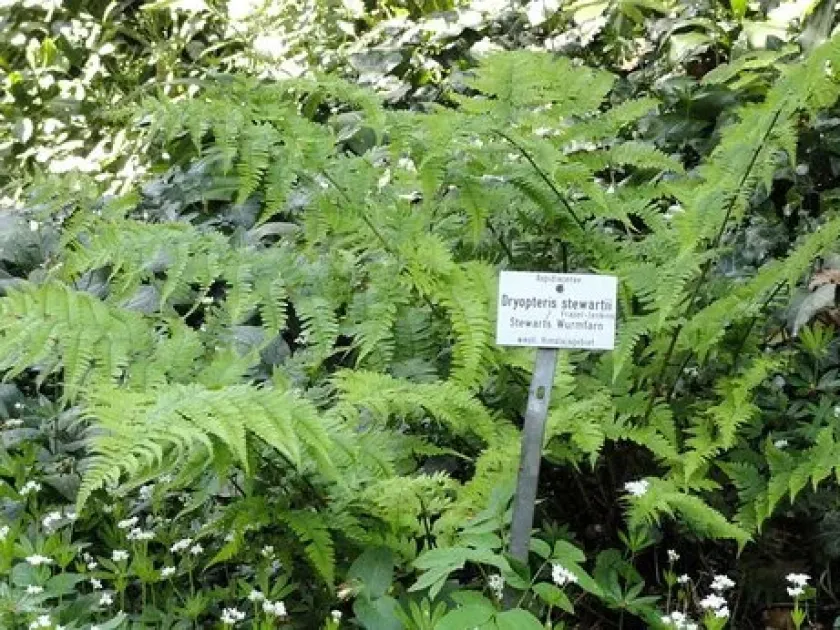
Description
Growing requirements
Stewart's wood fern (Dryopteris stewartii) is a perennial sporophyte belonging to the Dryopteridaceae family. It is recognized primarily as an ornamental plant utilized in nurseries and landscaping due to its structural beauty and architectural form.
The species originates from the Himalayan regions, specifically growing in the high-altitude forested areas of India, Pakistan, and Nepal. Its native habitat provides cool, moist, and shaded environmental conditions, which are critical for its successful cultivation.
Cultivation requires well-draining, loose, organic-rich soil that mimics the forest floor. A neutral to slightly acidic soil environment is considered optimal for the healthy development of its rhizome system and the production of lush fronds.
This fern is strictly adapted to shade or partial shade environments. Direct exposure to intense sunlight will scorch the fronds and severely stunt growth. It is essential to provide a location that ensures consistent air humidity and shelter from harsh, drying winds.
Botanically, it features sturdy, scaly rhizomes and expansive, bipinnate or tripinnate fronds that form a vase-like rosette. Its growth habit is relatively slow but persistent, making it a valuable long-term addition to temperate climate gardens.
Main diseases and pests
The primary agricultural threat to Stewart's wood fern is root rot caused by poor soil drainage and waterlogged conditions. Maintaining proper soil moisture without saturation is the main challenge for successful maintenance.
Garden pests, including slugs and snails, often feed on the tender emerging fronds during the early spring season. In dry and stagnant conditions, spider mites can also infest the underside of the leaves, necessitating manual control or integrated pest management strategies.