
Pale male fern
Dryopteris pallida
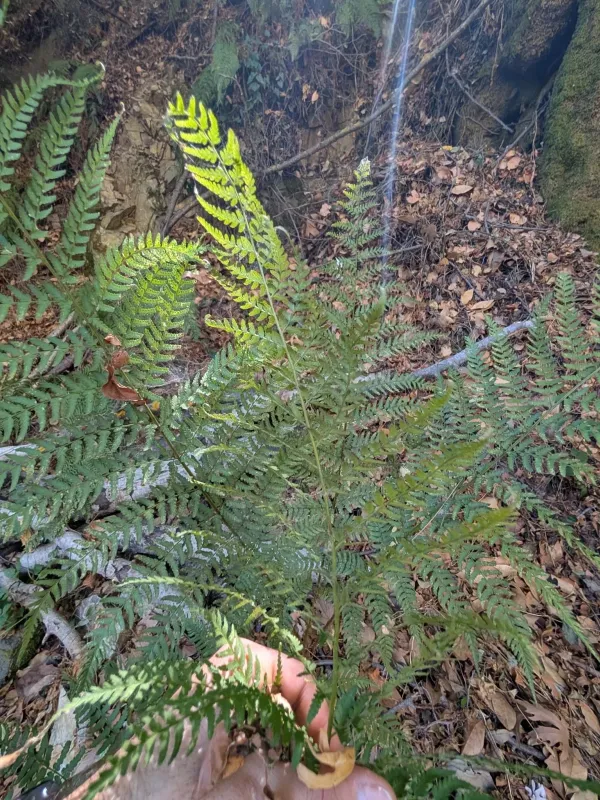
Description
Growing requirements
The pale male fern (Dryopteris pallida) is a perennial herbaceous plant belonging to the Dryopteridaceae family. It is increasingly utilized in both specialized ornamental plant production and landscaping.
Originating from the Mediterranean and surrounding regions, the species is naturally adapted to rocky slopes and shaded woodland environments, which dictates its preference for specific growth conditions.
The culture thrives in well-drained, humus-rich, and loose soils with a neutral to slightly acidic pH level. Proper drainage is the most critical factor for preventing root damage in cultivation.
These ferns prefer partial shade and high humidity levels. While they can tolerate some light, direct scorching sun is detrimental to their pale-green, leathery fronds and overall vitality.
Botanically, Dryopteris pallida is characterized by a rhizomatous growth habit and the formation of elegant leaf rosettes. Propagation is achieved through spore sowing or by carefully dividing mature rhizomes during the dormant season.
Main diseases and pests
The primary threats include various root and crown rots, which are almost exclusively caused by waterlogging or a lack of adequate soil aeration during the growing season.
Slugs and snails are the most significant biological pests for this fern, particularly during the early spring when new fronds begin to emerge from the crown.
In greenhouses or low-humidity indoor environments, spider mites can pose a risk, causing yellowing and premature drying of the fronds if left untreated.
Maintaining proper spacing and ensuring adequate airflow between plants significantly reduces the risk of fungal outbreaks such as leaf spots or grey mold.
Effective management includes regular monitoring, manual removal of debris, and the targeted application of pesticides or fungicides only when threshold levels of infestation are reached.