
Goldie's wood fern
Dryopteris goldiana
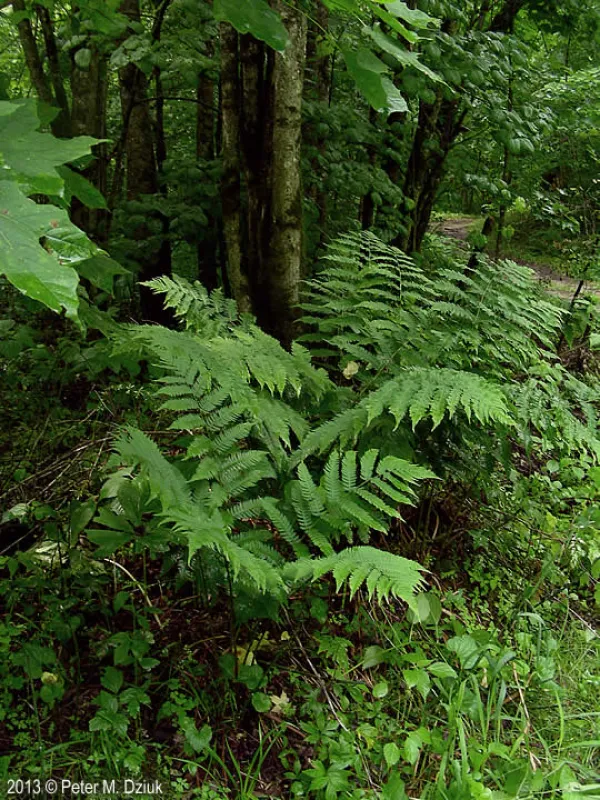
Description
Sowing dates
Propagation of Goldie's wood fern in nurseries is most commonly achieved vegetatively through rhizome division, as spore propagation is a lengthy and complex process.
The optimal time for dividing the clump is early spring, before active sap flow begins, or early autumn, when the plant transitions into dormancy before winter.
When planting divisions, ensure the growing point remains at the soil surface level to prevent root system rot during the adaptation phase.
Sowing spores is performed in sterile substrate consisting of peat and sand, ensuring constant humidity and temperatures between 18–22 degrees Celsius.
After transplanting to open ground, young specimens require shading and regular watering until fully established, which usually takes about a month.
Growing requirements
Goldie's wood fern prefers shaded areas with diffused light, as direct sunlight causes leaf blade burns and loss of decorative appeal.
Successful growth requires fertile, loose, and consistently moist soils with a high humus content and a slightly acidic to neutral pH level.
The culture is extremely sensitive to drought, so maintaining stable substrate moisture is crucial in agrotechnology, while avoiding water stagnation which leads to rot.
Optimal temperature for vegetation ranges from 15–25 degrees, although the plant possesses high frost resistance, typical for species originating from temperate forest zones.
Mulching the root zone with leaf mold or wood chips helps retain moisture and mimics the natural forest floor litter necessary for healthy rhizome development.
Main diseases and pests
The primary pests for this fern are slugs and snails, which damage the young unfolding fronds during the spring growth period.
If humidity regimes are disrupted or soil becomes waterlogged, the plant may suffer from root rot or decay at the base of the petioles.
Under indoor conditions or poor ventilation, the plant can be attacked by scale insects and spider mites, requiring the use of specialized insecticides.
To prevent fungal diseases, it is essential to ensure good air circulation around the plant and avoid getting water directly into the center of the rosette when watering.
Regular inspections of plantings and prompt removal of dead or damaged fronds contribute to maintaining the overall sanitary condition of the culture.