
Fragrant shield fern
Dryopteris fragrans
Description
Growing requirements
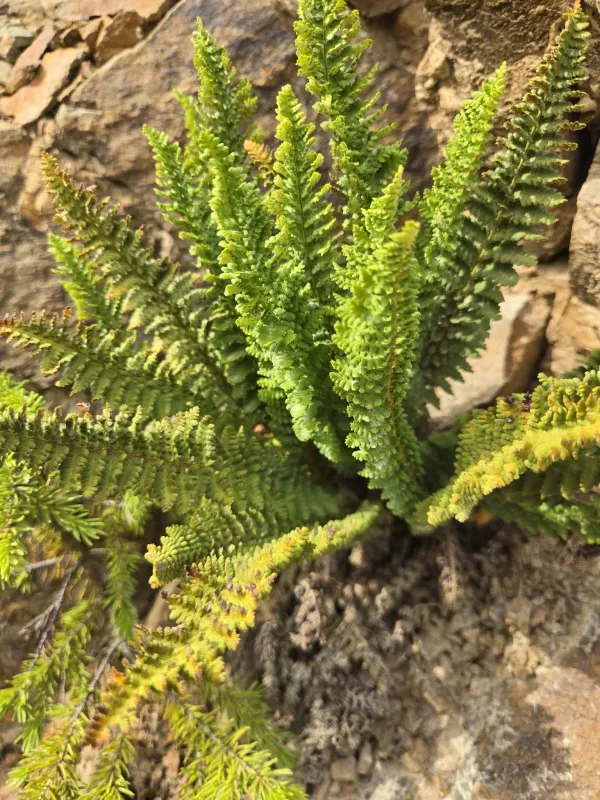
The Fragrant shield fern (Dryopteris fragrans) is a member of the Dryopteridaceae family. It is a perennial herbaceous fern native to rocky outcrops and mountainous regions of the Northern Hemisphere.
The species is famous for its unique scent, reminiscent of wild cherries, which is produced by resinous glands on its scales. It has adapted to cold, harsh climates, showcasing remarkable hardiness.
To cultivate this plant successfully, one must provide well-drained, slightly acidic soil. The plant thrives in habitats that mirror its natural environment, such as rocky gardens or specialized fern beds.
It prefers bright, filtered light and cooler temperatures. Unlike many forest ferns, it can tolerate more exposure to light, provided the soil moisture is maintained without becoming waterlogged.
Propagation is typically done through rhizome division or spores. Given its slow growth rate, proper care and patience are essential for establishing a healthy population in a garden or nursery setting.
Main diseases and pests
Root rot remains the most significant threat to the Fragrant shield fern. This is usually caused by excessive watering or poor soil structure that fails to provide adequate drainage.
Pests such as aphids and spider mites can occasionally affect the foliage, particularly if the plant is grown in restricted indoor or greenhouse environments with low air movement.
To prevent disease, it is essential to ensure good air circulation around the fronds. Regular cleaning of the growing area helps in keeping the plants free from common garden pathogens.
Fungal infections can be managed by applying organic fungicides at the first sign of leaf spot or decay. However, physical removal of infected tissues is often the most effective method.
Monitoring for signs of stress is vital, as the plant reacts slowly to poor environmental conditions. Maintaining stable moisture and light levels will generally keep the plants healthy.
Harvesting
In terms of usage, the Fragrant shield fern is valued for its traditional medicinal properties. The rhizomes are the primary part used in preparations due to their essential oil content.
Harvesting should be done during the dormant period, typically in early spring or autumn. Care must be taken to remove only a portion of the rhizomes to ensure the plant's regeneration.
The harvested material is cleaned and dried at low temperatures to preserve its chemical profile. High heat can destroy the volatile compounds responsible for the characteristic fragrance.
Storage requires cool, dry conditions away from direct sunlight. Proper packaging prevents the loss of potency and ensures the shelf life of the extracted plant material.
Sustainable harvesting practices are crucial, as wild populations of this species can be sensitive to over-exploitation in certain parts of its natural range.